The Industrial Metaverse and Digital Twinning


This year’s Mobile World Congress, MWC 2023, was the first true Mobile World Congress since 2019, and it was quite apparent that the show was back in full swing. I attended the event last year, but it was considerably smaller—a shell of its former self—which is something I couldn’t say about this year’s show. The GSMA, which organizes the event, says that 88,000 people attended this year, up from 66,000 last year (albeit still down from 2019’s 109,000).

Furthermore, practical knowledge regarding utilizing existing 3D spatial mapping for AR platforms and other tools/use cases is limited. Similarly, knowledge of tools and techniques for creating and managing 3D environment maps (offline or in-situ) is insufficient. Consequently, developers and engineers deploying enterprise AR fail to take advantage of valuable opportunities to:
Research Goal
The AREA seeks to provide its members with knowledge and a deep understanding of the current state of the art of continuous or periodic 3D mapping of enterprise and industrial environments for AR and the available tools to leverage this information to develop spatially aware applications such as AR. This project provides actionable information which members can use to more effectively identify solution providers and partners and leverage prior investments made by their own organizations or their customers and partners in digital twins and 3D spatial maps.
If you’d like to learn more about this project or any other AREA research projects, please send an email to the Research Committee. To get involved, learn more about AREA membership here.

You may have heard about the industrial metaverse lately in the news or event at recent events. This immersive and interactive world combines real and virtual elements to create a new, innovative form of collaboration and production along with many other evolving uses. This digital environment is rapidly changing how we work, learn, and play, and augmented reality (AR) plays a crucial role in its development and success.
AR is a technology that superimposes digital information onto the physical world, creating a new and interactive experience. AR revolutionizes the industrial metaverse by allowing users to visualize and control digital models for improved enterprise design, production, and maintenance.
“The metaverse brings the physical and digital worlds together, allowing people and things to collaborate more intuitively with complex systems in person or afar,” explains Steve Dertien, Chief Technology Officer of PTC. “The metaverse, as a 3D interface for IoT, will make the physical and digital indistinguishable and therefore augment our human ability to make better-informed decisions with a minimum of mental energy and training.”
One of the critical benefits of AR in the industrial metaverse is that it reimagines remote collaboration and knowledge transfer. By combining natural and virtual elements, AR can create a shared experience between experts in different locations, allowing them to work together on complex projects and problems in real-time. This can help reduce the time and cost associated with traditional collaboration methods, such as travel, while also improving the quality and accuracy of the results.
Another essential benefit of AR in the industrial metaverse is that it can help to reduce the risk of human error and improve safety in high-risk industrial environments. For example, AR can provide workers with real-time information and guidance, reducing the need for manual processes and minimizing the risk of accidents and errors.
The AREA recognizes that human-centered design is critical to building and deploying successful AR applications, devices, and services. The Human Factors Committee is a forum for members to exchange ideas, resources, and research on best practices. The AREA-funded research on Safety and Human Factors Assessment Framework and Best Practice Report reviews the general risk management cycle as a preface to describing a new ‘Safe AR Design – Best Practice’ methodology for enterprise AR. Check out the case study and report here.
In addition, AR can also help to improve the efficiency and productivity of industrial operations. By providing workers with real-time information and feedback, AR can help to optimize processes and increase the speed and accuracy of decision-making. This can help to reduce downtime, increase output, and improve overall performance.
To fully realize the benefits of AR in the industrial metaverse, it is vital to have the proper infrastructure in place, depending on the use case. By investing in the right technology and tools, companies can create a new and innovative industrial environment optimized for collaboration, production, and efficiency. One example of this is remote assistance. Whether you are working on adopting AR or a provider, the AREA’s member ecosystem works together to help accelerate enterprise adoption across industries.
In conclusion, AR plays a critical role in developing the industrial metaverse, providing companies with a new and powerful tool for collaboration, knowledge transfer, and production. With the right technology and infrastructure in place, AR can help companies revolutionize how they work and compete, creating a new, innovative form of digital collaboration optimized for a safe and productive future.

It’s difficult to say precisely how augmented reality (AR) will impact the enterprise industry in 2023. It is a rapidly evolving field, and many factors could influence its development and adoption. However, with the expansion of technological advances and adoption, AR will likely continue to be used in various industries, including manufacturing, healthcare, education, and more. Some potential ways in which AR could impact the enterprise industry in 2023 include the following:
To learn more about the impact of AR check out our AREA use cases.
Industry Adoption Capabilities Include:
In manufacturing, AR can assist with training and maintenance, allowing workers to access real-time instructions and information as they work. It can also be used to visualize and design products before they are built and assist with maintenance and repair tasks.
In healthcare, AR can assist with surgical procedures, allowing surgeons to access 3D images of the patient’s anatomy and other relevant information during the operation.
In education, AR can be used to create immersive learning experiences, allowing students to interact with 3D models and other digital content in a more engaging way.
Overall, it is expected that AR will continue to play a significant role in the enterprise industry in the coming years, helping businesses to improve efficiency, reduce costs, and enhance the customer experience. The AREA is working to help enterprises maximize the impact of AR by providing up-to-date resources and neutral, reliable guidance that make the path to AR adoption surer, shorter, and smoother.
By identifying opportunities and challenges, disseminating information, spearheading research, promoting dialogue, and providing a forum for AR providers and enterprises, the AREA is clearing a path to interoperable AR-enabled enterprise systems that fully deliver on their promises. If you are new to AR and looking to find a useful tool to develop solutions take a look at our Enterprise AR Use Case Development Framework.
To learn more, visit: www.thearea.org

Michael was a true expert in the 3D visualisation space. After a stint in the late 1980’s in the US, Michael returned to the UK to become a research associate in 3D Computer Vision at the University of Sheffield. This led to a distinguished career in Immersive Technology including time spent in New Zealand, returning to the UK and Bristol to work at DIVISION, as VR R&D lead and Director of Marketing and Product Management.
DIVISION was acquired by PTC (an AREA sponsor member) and Michael held numerous executive roles delivering product and solution management. We spoke many times about the hard work and fun he enjoyed working at PTC and I’m certain that his dedication, insights and intelligence were important factors in the success of PTC today.
After leaving PTC in 2017, the AREA was fortunate to secure Michael’s time as the AREA Researcher. At the same time, the AREA also worked with Michael’s business partner and wife, Angela. For over 4 years, Michael was fundamental in creating in depth, thought leadership content for the AREA members. Blog articles include:
Michael was also the lead for the development of the AREA Statement of Needs (ASoN) tool, used for collecting and delivering enterprise AR Requirements.
Michael was not only an expert in the enterprise AR field, but he was a good friend, with a wicked sense of humour and one of life’s all-round good guys. He will be missed. The AREA family sends their thoughts and condolence to Angela and the family.

“The Best of Swiss Apps Awards” is a major annual event for the software development community in Switzerland – and this year, the winner of the Gold award in the Extended Reality category went to AREA member Augment IT, a leading Swiss software company specializing in Mixed and Augmented Reality enterprise solutions. The awards ceremony was held on November 2nd in Zurich.
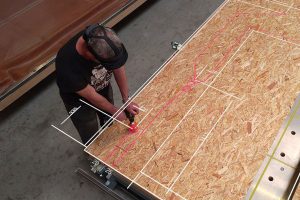
The winning app is called woodtec AR Utility, and its award-winning success provides meaningful clues to how AR can increase its presence in the industrial enterprise. The innovative solution uses AR to completely do away with paper plans in the prefabrication of wooden walls – saving time, effort, error, and cost.
“The feedback we got from the award judges is that the solution won because of how it applies AR,” said Reto Grob, Augment IT’s Managing Director. “It brings together the physical context of the tabletops with the digital overlay information to really take IT into places it has not been possible to go to before.”
woodtec AR Utility enables fabricators wearing HoloLens 2 devices to view up-to-the-minute plan information in context on the work surface, thereby reducing the time required to access and verify plan information – and minimizing errors. Watch a video of woodtech AR Utility in action here.
Augment IT created the app for woodtec Fankhauser GmbH, a 35-year-old Swiss-based company that designs, builds, and markets a growing array of machinery to support the fabrication of engineered wooden components, from cross-laminated timber (CLT) to prefabricated wall and roof panels.
As the people at woodtec Fankhauser GmbH like to say, “We make machines but we love wood.” That love of timber construction has led the 35-year-old Swiss-based company to continually seek new ways to make it easier, faster, and more affordable for its customers to build with prefabricated wood. woodtec AR Utility is the latest example – and the company’s first customer software solution.
Augment IT engineers and woodtec Sales Manager Benjamin Fankhauser worked collaboratively throughout the development process.
“Our approach was to work iteratively and in a very agile way,” explained Grob. “We did a very fast prototype first with, let’s say, a first risk investment. After that, the use case was proven, and we could go into a productive development – again in phases – to balance the investment versus the returns. Benjamin Fankhauser was a key person because he understands the requirements of their customers. He was also key in helping to identify the most suitable first adopters and to guide them in making the change to the new solution.”
Today, a year after its first deployment, woodtec AR Utility continues to gain acceptance among the company’s customers.
When asked what the success of woodtec AR Utility has taught Augment IT about accelerating the adoption of enterprise AR, Grob replied, “The main obstacle is not the solution itself, but rather the change management requirements of introducing a digital tool with hardware and software. It is very important to focus on those features that reduce the friction for the workers to use. Therefore, listen to them and prove it by implementing convenience features. The best integration and user management system do not help if the workers won’t adopt it.”

What’s the best way to open developers’ eyes to the enormous potential of hands-free assisted reality applications for frontline workers?
For AREA member RealWear, the answer is to invite developers to a two-day event at their Vancouver headquarters, give them their own RealWear Navigator™ 500 device, and have RealWear’s CTO and VP of Software show them how to create a hands-free, voice-driven application.
It’s the first-ever onsite RealWear Developer Academy and it all happens November 16 and 17.
“It’s an opportunity for developers with mobile or desktop app development experience to create hands-free, voice driven solutions,” said RealWear Senior Director of Training and Implementation Kristen Naeini.
RealWear is “the world’s leading provider of assisted reality wearable solutions that engage, empower, and elevate the modern frontline industrial worker to perform work tasks more safely, and with increased efficiency and precision.” Because RealWear gives these workers real-time access to information and expertise, while keeping their hands and field of view free for work, it has attracted a growing number of world-class customers, including Shell, Goodyear, Mars, Colgate-Palmolive, and BMW.
In addition to getting hands-on experience with RealWear technologies, participants will have opportunities to network and share ideas with RealWear team members. The cost for the two-day event, including the Navigator 500 device, the training sessions, and RealWear-hosted lunches, is $2500 per person ($1000 for those who bring their own devices).
Attendees will leave the event with the apps they’ve developed, the skills to develop and optimize more solutions, and a deeper understanding of the benefits that RealWear can deliver today to frontline workers.
“We’re at a golden time to enter the market while still being considered an emerging technology,” said Naeini. “Because our solutions offer a non-immersive, mixed reality experience, it allows us to provide situational awareness, health and safety compliance, and actually start delivering on Industry 4.0 aspirations today – without delay.”

As the dust settles on the latest conference season, I wanted to share my reflections and excitement as we resume conducting face-to-face AR events across the world.
As an evangelist for enterprise Augmented Reality, I know that one of the best ways for people to understand what AR is, what business problems it solves, and how will it benefit their work is to experience the solution in person. That’s what made the recent Immerse Technology Conference on September 28 and 29 such a successful event.
The AREA hosted the conference with partners Innovate UK KTN, Made Smarter Innovation Network, Immerse UK and the High-Value Manufacturing Catapult (HVMC). It was held in Factory 2050, located in the Advanced Manufacturing Resource Centre (AMRC), University of Sheffield, Sheffield, UK, a longstanding AREA member.
Many thanks to Gold sponsors Magic Leap, Rockwell Automation, Augmental, and Team Viewer, as well as our Bronze sponsors Assured Cyber Protection, Realwear, ESI Group, and support from Microsoft.
More than 100 attendees were on hand, providing many opportunities for demonstrations and hands-on workshops defining the benefits and challenges of deploying AR technology.
Day 1 started with an introduction from the host companies followed by excellent thought leadership presentations from companies who have successfully deployed AR. Boeing, Siemens, and Rolls Royce highlighted the work and benefits they have gained from the successful and wide deployment of AR.
Magic Leap then presented and launched the Magic Leap 2 in the UK with a presentation on its new features and go-to-market strategy. Rockwell Automation also provided an insightful presentation titled “Extended Reality and its Role in Digital Manufacturing”.
The rest of Day 1 focused on workshops, led by Augmental and Magic Leap, in which attendees learned about the AREA tool “Enterprise AR Use Case Development Framework” to help understand AR/VR Uses Cases and Requirements. This interactive session was enjoyed by all the participants and offered a great opportunity to learn from experts and discuss key use cases.
Finally, there was more time to experience the excellent demos from the sponsors and engage in some informal networking. We’d packed a great deal of content into Day 1 – but there was much more to come.
We began Day 2 with a thought leadership presentation from ESI Group, “Industry 4.0 Drivers for VR Democratization,” followed by one on the key challenges for implementation, building an AR workforce. A panel of experts from Realwear, Boeing, and Rockwell Automation discussed tactics and tools to convince stakeholders in a company to invest in AR solutions and how to overcome end user concerns.
Augmental followed with an excellent presentation on a process to help companies deploy AR and a case study from technology partner holo|one.
Creating a Return on Investment (RoI) model is often a challenge, but in the next session, the AREA showed how to overcome it using the free AREA RoI Calculator. The session covered the background of the calculator, how to use it, and an introduction of AR cases studies that demonstrated a clear RoI. The presentation from Strategy Analytics helped the attendees understand and plan future RoI analysis.
Two more thought leadership presentations from Team Viewer and Realwear led the way before interactive sessions on Human Factors and Related Safety Challenges, and “Security is Key: Overcoming the Challenges of AR Security”. The event concluded with a set of three-minute pitches from immersive tech providers on their solutions and “Understanding Virtual Reality Use Cases, Requirements & Research”.
Feedback from attendees was excellent, with many of them appreciating having the ability to experience, interact with, and learn from the AREA members, giving them a clearer understanding of how to deploy AR.
When it was all over, participants had learned:
Based on that success, we are now in the midst of planning future similar events in Europe (Q1 ’23), the US (Q2), and the UK (Q3). If you have any questions regarding the event – or would like to participate in our future conferences – please contact me ([email protected]).

One of the great obstacles to helping people of all ages develop an interest in science, technology, and invention, according to Jessica Cobb, founder and CEO of Mission Control Lab, is that so much about technology is hidden from view.
“At Mission Control Lab, we want to reveal embedded cyber-physical systems,” said Jessica in an interview from her base in the Netherlands. “Because you can’t see the workings behind technology, it’s frustrating and limiting and decreases connectivity.”
Jessica, who describes herself as an “emerging technologist, founder, maker, inventor, digital unicorn, and serial entrepreneur,” has devoted her professional life to revealing what’s hidden, bringing forth the fascinating connections between electronic components to engage learners in pursuing what she calls “inventure™” (“invention plus adventure”). She has turned to Augmented Reality (AR) to assist in that process.
“We’re using AR in our products to reveal the webbing between networks in our systems design exercises,” Jessica explained. “One of our products is kind of like electronic Legos with light, movement, and sound. With AR, you can see those electronic Lego parts being appliquéd onto different surfaces and link those connections back to a particular application.”
The products Jessica refers to are sold in MakeON® kits. Go here or here to see them in action.
For the AR ecosystem, the work of Mission Control Lab is not only a clever way to use AR to bring concepts to life; it’s also a way to build a diverse and inclusive global community of innovators who appreciate the value of AR. That can only benefit the adoption of AR as more AR-experienced people enter the workplace.
“At Mission Control Lab, we make this connection between individuals, industry, and education,” she explained. “This gives us a better sense of what’s going on in terms of needs for the workforce, as well as what’s meaningful for people, enabling us to create a relationship with the future of work now. That’s why the AR piece of it is so important; it’s engaging interest, meaning, and intrigue.”
For Jessica, the goal isn’t simply to show people how to build stuff.
“It’s not the end invention where the real social impact and change occurs,” she said. “It’s in the space between adventure and invention. If we are cultivating that space cooperatively, a lot of the challenges we’re facing in education and workforce development just dissolve. That’s what Mission Control Lab is about. Our products MakeON® and Inventure embody the storytelling around identity, the individual, and emerging technology.”
With the newly-launched Inventure initiative (discover more here), Mission Control Lab is seeking to engage directly with enterprise partners to build what Jessica calls “future fitness pathways.” Jessica’s vision is to create an online space where people and organizations can collaborate and access cutting-edge media content.
“With Inventure, an 11-year-old in France is going to be able to talk about some new tech and apply it in the Inventure space with an 11-year-old in Indonesia. It’s kind of a mixture of LinkedIn, Instagram, and Hunger Games,” she laughed.
Jessica is also actively planning to use AR technology in a way similar to Ikea Kreativ, the iOS-based AR tool that enables customers of the Swedish furniture company to capture their spaces in 3D and decorate them.
“We want you to be able to make wearables, walls, and objects come alive with AR, and then replicate that in real life,” said Jessica. That experience will likely hit the market within the next quarter.
AREA members and the greater AR ecosystem can support the work of Mission Control Lab by exploring partnerships and sponsoring opportunities. For more information, please contact Jessica Cobb.