The AREA Welcomes Nine New Members

The new members come from every corner of the AR ecosystem, including app developers, interaction technology providers, manufacturing solutions providers, AR wearables manufacturers, and vertical industry solutions providers.

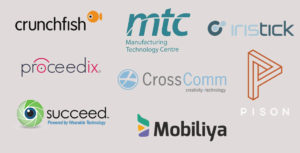
New Contributing Members include Crunchfish, Manufacturing Technology Centre (MTC), Mobiliya, Proceedix, and RealWear. The AREA has also welcomed four members in its recently-announced Startup level of membership: CrossComm, EyeSucceed, Iristick, and Pison.

“As Enterprise AR adoption grows, we are seeing more companies joining the AREA to forge connections, share information, and influence the future of the industry,” said Mark Sage, AREA Executive Director. “We welcome these new members to the alliance and look forward to supporting their needs and benefiting from their expertise.”

The AREA supports innovative companies pursuing AR initiatives that need a better understanding of the tools available, application possibilities, methods of implementation and return on investment. It provides a free and open exchange of best practices, lessons learned, and technological insights that can help enterprises effectively implement AR technology, boost operational efficiency and create long term benefit.

The AREA’s membership benefits include access to high-quality, vendor-neutral content and participation in various programs, a research framework to address key challenges shared by all members, discounts for fee-based events, and more. Sponsor members have a direct role in shaping the rapidly expanding AR industry and demonstrate their companies’ leadership and commitment to improving workplace performance.

About the new AREA members

Crunchfish

Crunchfish develops and markets software that creates new possibilities for interaction with mobile and wearable devices. The company enables gesture interaction in AR/VR environments and its mobile proximity technology creates innovative solutions for m-commerce, social apps and context independent information in AR smart glasses. Crunchfish technologies are licensed to hardware manufacturers and application developers and are currently available in millions of devices from global players. Crunchfish has been listed on Nasdaq First North since 2016. The company was founded in 2010 and is based in Sweden.

Manufacturing Technology Centre (MTC)

The vision of the MTC is to inspire Great British manufacturing on the global stage. The organization provides integrated manufacturing system solutions across a broad range of industries. One of seven High Value Manufacturing Catapult centres in the UK, the MTC is at the forefront of a number of innovative technologies including digital manufacturing, robotics and additive manufacturing. It is headquartered in Coventry, England.

Mobiliya

Mobiliya is a global engineering and design services company, enabling digital transformation for the world’s leading organizations, through disruptive technologies such as AR/VR, IoT and AI. Mobiliya develops innovative solutions to enhance training efficiency and field service productivity based on AR, focusing on industries such as healthcare, telecom, and manufacturing, where complex equipment and workflows are used. Mobiliya also offers content development services to convert available business content to create 3D models and animations for immersive experiences. Mobiliya’s AR360 solution platform shortens the time to market when creating AR-based field support applications, step-by-step guidance, troubleshooting and training that can be consumed on mobile devices, tablets and smart glasses. AR360´s content management system gives customers the ability to easily create and modify content without the need for software development, and to instantly publish it to authorized field users.

Proceedix

Proceedix offers a solution for easy and agile procedure management, made paperless and mobile. A Web-based content platform enables users to manage all their checklists and work instructions, making the execution of work instructions and inspections fully mobile and traceable while bringing organizations the benefits of powerful statistics. Proceedix software runs on Glass Enterprise Edition and Iristick’s smart safety glasses, tablet and mobile phone, enabling field experts or factory workers to work faster, more focused and hands-free. Proceedix is headquartered in Belgium.

RealWear

RealWear is a leader in ruggedized industrial wearables. Its flagship product, the HMT-1, is the world’s first industrial voice-driven, completely hands-free, head-mounted wearable computing device. RealWear recently received the Frost & Sullivan New Product Innovation Award for Industrial Wearables.

CrossComm

CrossComm is an award-winning mobile, web, and immersive app studio focused on leveraging innovative mobile and cloud-based app technologies to solve real-world problems. The company’s CrossComm Labs initiative explores practical applications of AR and Artificial Intelligence. Headquartered in Durham, North Carolina, CrossComm has deployed several mobile AR app solutions and is developing app solutions for HoloLens and other head-worn AR/MR devices.

EyeSucceed

EyeSucceed brings together the power of Augmented Reality and wearable technology to transform how the food industry addresses real-world challenges, such as high labor costs, employee training, and consistent execution. EyeSucceed is leveraging the power of AR for smart training, reducing labor costs, driving consistent execution, and improving food safety and quality.

Iristick

Based in Belgium, Iristick designs and manufactures smart glasses for industrial applications. Iristick glasses leverage the power of your existing mobile device and are distinguished by their exceptional performance, long battery life, rugged design, safety, and comfort.

Pison

Pison creates transformational human-computer interaction to expand the horizon of human capabilities. The company develops wearable devices that use biopotential on the surface of the skin as input, enabling intuitive and powerful gesture control of smart glasses and robotics. Vertically-integrated solutions combine hardware, software, machine learning, and UI for AR industries. Investors and partners include Oculus, MIT, Draper, and the National Science Foundation.



What is Projection or Spatial Augmented Reality?

Projection Augmented Reality, sometimes also referred to as “spatial Augmented Reality,” is a method of delivering digital information to users within a stationary context. Target objects and users can move around in the environment, but the zone in which AR experiences take place is limited to the fields of view of both the fixed projector and supporting camera for tracking.

The first example of projection Augmented Reality was called the “Digital Desk.” In November 1991, within months of their contemporaries at Boeing, Tom Caudell and David Mizell, coining the term “Augmented Reality,” William Newman and Pierre Wellner, then researchers at University of Cambridge and Xerox EuroPARC, published a paper in the UIST 1991 conference proceedings called the DigitalDesk Calculator: Tangible Manipulation on a desktop display.

In this 8 minute video, Pierre Wellner explains the concept and demonstrates the working prototype of the first system.

How it Works

Projection Augmented Reality features one or more optical devices (projectors) that project a beam of light onto a specially designed work surface and in some cases directly on the parts on which a user is working. This provides immediate guidance for tasks and reduces the need to interrupt workflows to consult information elsewhere.

Workspaces for projection Augmented Reality also feature any of a variety of stationary cameras. Cameras are positioned to track objects with or without fiducials. Control of the workspace environment, such as lighting, reduce the computational complexity of the tracking algorithms.

Once configured, the projection Augmented Reality system can provide user instructions or assistance in a variety of media. For example, digital information can be:

  • Text, for example, cycle time count down
  • Images, for example, blueprints or simple directional arrows
  • Animations
  • Videos

Some systems also provide assistance by way of task-synchronized audio.

Benefits of Projection Augmented Reality

Projection Augmented Reality can offer the following benefits:

  • Reduces or eliminates the need for computer monitors and screens, as the instructions appear directly in the task space.
  • Reduces users’ cognitive load when following work instructions due to the fact that there is no need for “attention switching” between work instructions and the task at hand.
  • Integrates into manual workflows by promoting a “no faults forward” policy to ensure and confirm correct execution of the preceding step.
  • Provides feedback on completed tasks for process improvement, traceability and unique digital IDs for build cycles.

Use Cases

Projection Augmented Reality can optimize performance of some types of production and logistics tasks when the work can be performed at a station (rather than the user going to the workplace or moving around in a larger space).

Tasks that can benefit from projection Augmented Reality include:

  • Assembly
  • Disassembly
  • Inspection
  • Part knitting
  • Sequencing
  • Maintenance
  • Tool changeovers
  • Gauging
  • Welding
  • Wire harness routing
  • Glue bead replacement
  • Logistics (shipping and receiving)
  • Inspection
  • Training


Harvard Business Review Goes All-in On AR

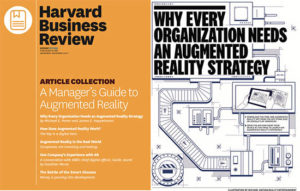
Now Augmented Reality is getting the HBR spotlight in the November/December issue – and you can download a copy of the article HERE.

In it, noted strategist, author, and Bishop William Lawrence University Professor at the Harvard Business School, Michael Porter and Jim Heppelmann, president and CEO of AREA member PTC, provide business leaders with a comprehensive exploration of AR, from definition to applications to benefits.

“The title of the article says it all – Why Every Organization Needs an Augmented Reality Strategy,” noted Marc Schuetz of PTC, an AREA board member. “It makes a very strong case for how AR will change how we interact with the world around us.”

Jon Lang, lead principal business analyst at PTC, noted that the article is the third in a series written by Porter and Heppelmann. “In 2014, they wrote about smart, connected products and the Internet of Things. Next, they researched the organizational implications of smart, connected products and the data they produce on companies using or making these products. Now, in this third article, they discuss how AR is one of the best ways to channel the value of the data that smart, connected products create.”

As the article puts it, “AR enables a new information-delivery paradigm, which we believe will have a profound impact on how data is structured, managed, and delivered.”

Porter and Heppelmann highlight several real-life examples of AR applications, including AREA members Newport News Shipbuilding and Boeing. It discusses how Xerox used AR to improve field engineers’ first-time fix rates by 67% and how AR enabled KPN, a European telecommunications services provider, to reduce overall service team costs by 11%.

The article even comes with an AR experience accessible via an app download to give readers a first-hand sample of AR in action. Watch a video of the experience HERE.

PTC’s Jon Lang sees the HBR article as a great way to educate business leaders about AR. “Porter and Heppelmann make a compelling case for why this technology is so powerful and why executives should consider integrating it into their strategies now – because there are a lot of opportunities and the technology is ready today.”

Get your free copy of the article HERE.


Alex Gibson Interviews AREA’s Mark Sage at AWE Europe 2017 in Munich, Germany

In this podcast, Alex Gibson of 103.2 Dublin City fm reports from AWE Europe held in Munich, Germany on 19 & 20 October 2017. This is Europe’s largest gathering of Augmented and Virtual Reality professionals and among those interviewed are Mark Sage from The AREA (Augmented Reality for Enterprise Alliance) [at 15:35 into the show] and Ryan Pamplin, VP Evangalist from MetaVision who were showcasing their Meta 2 glasses.


Crunchfish CEO on Gesture Technology and the Future of AR

How would you describe the state of the AR ecosystem today?

It’s a very exciting period within AR. We have big actors like Google and Apple pushing AR in their new devices and new tools like ARCore and ARKit. And from an industrial perspective, we see a lot of companies starting to see the potential AR can bring. But it’s still a challenge to connect these industry actors with providers of software and hardware to create a total solution.

As a technology provider, we play a role in several segments of this AR ecosystem, including device vendors, software vendors and system integrators, where we utilize our gesture control and proximity technology to enable features. It’s an exciting ecosystem but also an ecosystem that’s in an early stage and that need groups like the AREA. The AREA provides a meeting place for the different creators where they can share and jointly develop these new solutions.

What do you think are the major obstacles to widespread AR adoption now?

There are several things. It is largely a matter of getting the industry know-how to where this new technology can make a difference. From a technology solution perspective, we not only need to provide the hardware or software solutions, but also to map them to the needs of the industry, which is a very complex environment. We need to get these two worlds to meet.

Second, it’s still early days from a hardware perspective. We are building these new devices based on components from the mobile world or other electronics areas, rather than designing them from scratch. We will need to come further in terms of battery life, design, performance, and the comfort of wearing these devices. There are a lot of things that need further improvement to really take off and meet the demands of the industry.

From a software perspective, of course, there are improvements needed as well. We are trying to contribute from our end on the interaction part, which I also think is very important, so that you can interact with these new wearable solutions in the way that’s needed. The methods you use, and the way it is done, are very important for the overall uptake on the end user side. At the end of the day, AR will really take off when we can get people to use wearables as part of their working environment and help them to get the “superpowers” these products can provide.

How important is gesture technology to the development and adoption of AR?

It is crucial, because we are providing the user with a new dimension. Designing for immersive environments is fundamentally different than designing for 2D flat screens. We’ve done a lot of studies into the development of user interfaces for AR solutions. To interact in three dimensions, you need a method that provides the capabilities you expect as a user, like interacting with objects and moving them around, and gestures can do exactly that.

Our mobile proximity technology provides another important part of the user experience, by providing contextual awareness – a key technology to secure information relevance and efficient information exchange when performing tasks. We’re looking at a paradigm shift within UI in AR within the next two years. Our contribution is to provide the means for the touchless interaction and contextual awareness part and making that possible in AR.

What can you tell us about the future of gesture technology in augmented reality?

The limitations are hardware currently. We can use a number of different sensors to enable gesture control, but most AR glasses and mobile solutions are based on 2D standup camera sensors. That limits the way in which we interact with gestures, especially in three dimensions. So, looking forward I expect there will come more advanced sensors in these devices that provide you the depth map, the third dimension of information, that is needed to interpret gestures in all three dimensions. With that in place, we can go from having gestures as a menu-driven, pick-and-choose interaction, to manipulating the environment you are working in with AR. That will be a huge change. Back to this paradigm shift, AR is one part of that shift but also the shades of interaction and how you build user experience and the user interface will be completely different in a few years, which will totally change the appearance of these solutions.

How do you expect to benefit from being a member of the AREA, and which AREA activities might Crunchfish be involved in?

We are very much looking forward to being an active member in driving the user experience aspect of AR. I think we can contribute quite a lot in this space. For the last seven years, we have been working with gesture interaction and user experiences in mobile devices, and lately in virtual reality headsets and augmented reality glasses. Since 2014, we have been working on our mobile proximity technology that provides contextual awareness between entities such as smartphones, wearables, machines, physical areas and vehicles. In a defined “proximity bubble,” our technology enables these entities to seamlessly discover, connect and share information with each other. Besides contributing our user experience expertise, we will certainly gain valuable insights about enterprise challenges and barriers for AR adoption from our fellow AREA members. We’re excited about getting to know and work with pioneers and innovators in the industry.


How Augmented Reality Is Transforming Work

Highlighted snippets from the article include:

  1. The bigger promise for AR (as opposed to the consumer market) which is estimated to become a $49 billion market by 2021, is for the professional hands-on workforce: Access to information and assistance on the go can make a huge difference in speed and efficiency.
  2. General Electric is one of several companies quietly testing AR technology as a method for improving productivity and reducing errors.
  3. Jay Kim’s comments focus on the excitement that was seized upon by early adopters wanting to make a difference to enterprises where real impact could be felt. “In an increasingly competitive global economic landscape, enterprise buyers look at every edge they can attain to maintain their competitive advantage over others,” Kim says.
  4. Another AREA member, Lockheed Martin, is mentioned for their development of mixed reality in the aerospace industry.
  5. According to a Forrester Research study, an estimated 14.4 million US workers will be wearing smart glasses in the workplace by 2025.
  6. Earlier this year, Google Glass returned with an Enterprise Editionthat fixed many of the technical flaws of the initial product. It can now be tacked on safety glasses, making it suitable for more work environments.

The full article can be read here.


AREA Publishes Industry-First Wearable Enterprise AR Security Research Reports

In response to growing concerns, previously documented in this series of blog articles, regarding the risks of deploying Augmented Reality (AR) solutions in enterprise environments to enterprise data security, the Augmented Reality for Enterprise Alliance (AREA) commissioned the first in-depth study of security-related issues that could impact the deployment and widespread adoption of wearable enterprise AR solutions.

AREA members are now able to benefit from the research results through use of two exclusive reports. The first, entitled Wearable Enterprise AR Security – Risks and Management, offers a validated, comprehensive approach for assessing data vulnerabilities and formulating risk mitigation plans. The second report, Wearable Enterprise AR – Security Framework and Test Protocol, provides a structured framework for AREA members to characterize the security threats associated with wearables and to assess major vulnerabilities against that framework. The test protocol also identifies key metrics for measuring real-world risks.

An executive summary, including the key findings published in the first AREA research report is available for public download. Both full reports are available exclusively to AREA members. To learn more about becoming a member and the benefits of membership, please contact Mark Sage, the AREA Executive Director.


Total Cost of Ownership of Enterprise Augmented Reality


Software

Over the past decade, early adopters of enterprise Augmented Reality like Airbus (formerly EADS), Daimler, Volkswagen, Boeing and others invested in internal software development tools and built their own platforms in order to integrate with existing data and business systems, and to manage as many factors as possible without relying on outside vendors.

Today, many who are starting or managing AR projects are still in research and development phases and seek to control variables as much as possible. They may still choose to build a new solution entirely within their IT organizations, but more often are able to license core enablers from commercial providers (at a cost or without fee), or to use open source projects.

As commercial solutions improve and offers expand, companies frequently find themselves needing to carefully re-evaluate the cost of building (or continuing to maintain) a solution internally. In some cases, purchasing off-the-shelf software solutions for experience development is less costly and there are other benefits.

Commercially ready SDKs for enterprise AR have several advantages. They usually benefit from a better user interface for use by developers. There is almost always documentation or webinars for getting new users up to speed and producing experiences quickly. Commercial solutions may also have more investment in core enabling technologies for object recognition, tracking and rendering. Getting these working with a variety of hardware platforms and maintaining those is costly.

The reason that many enterprises are still in the position of building or developing internally has to do with the risks associated with a commercial SDK provider changing strategies, a lack of resources for maintaining R&D, a low commitment to rapid change needed by enterprise customers, a lack of support for the enterprise IT group’s choice of hardware and maintenance costs of software and extensions. Many licenses have to be renewed annually or base a fee on the number of experiences; if the organization uses AR in many projects, the fees may be greater than developing and maintaining an internally engineered SDK.

Hardware

Any AR project requires sensors for detecting user context and intentions, a display system (personal or shared/stationary and attached to a tool or area of the shop floor) for providing experiences and processing for highly demanding computational tasks.

Since positioning the AR experience is so critical to success, many companies develop custom positioning and user detection systems involving infrared, highly calibrated systems that frequently re-use parts or build upon previous Virtual Reality project components.

Depth sensing is highly appropriate in enterprise AR where many targets are three dimensional and the CAD models are as well. Rendering 3D models in real time is highly processor intensive and benefits from storing the models in memory, another costly hardware component if a project exceeds one or two prototypes and begins to be deployed in dozens of positions.

Most enterprise AR projects begin with tablet computers. Tablets are suitable for prototyping but there are several types of obstacles. One has to do with security and safety using systems that are not designed for industrial environments or data access. For example, many IT departments cannot use devices that require connecting to the Apple App Store.

Separately there is ergonomics. To perform many AR-assisted tasks requires both the user’s hands or for the user to move around in a space without cables or obstructions. Here the options expand and many solutions are worthy of exploration before selecting one that will be deployed as an internal standard.

Some groups choose to develop custom hardware (contracted or internally developed) to meet their precise needs rather than purchase commercial products.

Content

In order to design the AR experience, the original content and models may need to be ported or adapted prior to use. In addition to raw data, there is also the user interface that has to be designed and adapted to a project.

Once in use, content must also evolve as the processes change. This can require starting over entirely. There also needs to be processes for data management and to store the data that has been captured by the AR system during use.

In general, project costs for content development are at least as great as for the other two essential components.

Integration

Once a pilot or prototype is proven, there will be a need to integrate AR-assisted components into the larger enterprise workflow. This requires planning and heavy testing to ensure that other components and procedures are stable and are not sacrificed for the purpose of real time data visualization in AR view.

Integration is a cascading problem, often leading to indirect costs such as upgrades to a database, greater data storage capacity, higher throughput networks and other costs to lower the delay and increase system performance.

Policies and Processes

Augmented Reality is likely to require the development of new policies and procedures and the refinement of existing ones. This involves legal staff, risk management, safety and security staff and other groups with responsibilities outside those of the information technology or business line management groups directly involved in introducing AR-assisted systems.

Policy and process changes may require coordination with regulatory bodies and other companies and organizations. These changes can escalate in terms of both cost and the time, and introduce delays in the calculation of return on original investment.

Training

As the rate of technology introduction and process changes increases, so do employee training requirements. Training is not only for those introducing and managing software, hardware and content, but also for those working in evolving workflows. New steps are introduced and old steps are eliminated.

New or changed training means less time to perform mission critical tasks and more administration. As with costs associated with changing policies and procedures, changes in training can escalate quickly.

Although it may not be possible to measure them precisely, training costs associated with introducing AR in an enterprise could add up in unforeseen areas and be delayed due to courseware development and review costs.

Introducing AR is a Long-term Investment

To truly integrate Augmented Reality in an enterprise will be a long-term process and significant investment, probably comparable to the computerization and automation of many enterprise processes over the past 20 years. These costs must be considered in light of the total impacts on the business.

Management will need the support of AR experts and IT groups to take in all the related costs as well as to estimate the risks of not introducing AR in an acceptable time frame on a large scale.

How does your organization calculate the total cost of ownership for introducing new technology? Is AR introduction stalled by unforeseen cost centers?


A Year of Enterprise AR

What I’ve Learnt as Executive Director of the AREA

I’ve had the most amazing year as Executive Director of the Augmented Reality Enterprise Alliance (AREA). Getting to really understand this new and amazing Enterprise AR ecosystem has been a fantastic journey.

I’ve spoken to many enterprise executives and innovation leaders who are looking to improve their companies’ performance and create efficiencies. There have been many conversations with providers of AR technology (including a growing number of startups focusing on AR) that are offering innovative solutions. I have also gained insight from numerous non-commercial organisations – from governments to universities and research institutes. All which has enabled me to gain a wide and comprehensive view of the Enterprise AR ecosystem.

So, what have I learnt in my first year?

When I started back in May 2016, I would have said that the Enterprise AR ecosystem was very “irregular” because of the following characteristics:

  • Enterprises were uncertain about which AR areas to invest in
  • Providers were unable to find customers
  • Technology readiness was unclear
  • Best use cases were still being defined
  • Efficiencies were difficult to achieve

What a difference a year has made. The ecosystem is moving forward rapidly, with more enterprises and providers understanding AR, developing focused solutions, providing more clarity on best practices and creating better tools.

Equally important, “AR language” is now being shared with key business decision makers (CEO, CIO, CTO). They are beginning to understand the benefits and challenges for the ecosystem.

But issues remain. Enterprise AR is still not a mainstream technology, performance improvements are not being realised across entire organisations, and many projects are stuck in the prototyping / testing phase.

With the help and insight of the AREA members, we have spent the past 12 months understanding what needs to be done to move from the “in prototype” phase to “full deployment” stage so that enterprises can gain the benefits and return on investment from AR.

The AREA Portal – your one-stop shop for neutral Enterprise AR information

The challenge is multi-layered and goes beyond just technology readiness! That’s why the AREA has continued to create initiatives to help enterprises. We are investing in updating the AREA portal and building a “one-stop shop” for Enterprise AR information – from AR use cases, case studies, and technology white papers, to the latest thought leadership articles, news stories, and events. It’s important to build a set of vendor-neutral information that can help executives make informed decisions. We are also working on creating more neutral ROI analysis and looking for enterprises and providers to help share any ROI information they have.

AREA research capability

We are also building up the AREA research capability. We have asked members what should be researched to help the growth of the Enterprise AR ecosystem and in 2016 we commissioned research on security in wearables. The report(s) are just about to be realised and will provide the AREA members with the following insightful and useful research:

Report 1 – Wearable Enterprise AR Data Security Risks and Management

This report will allow AREA members to better understand data security risks, communicate using a common vocabulary, characterize threats via a structured framework, assess major vulnerabilities against that framework, and identify key metrics to measure risks in the real world.

Report 2 – Wearable Enterprise AR Security – Framework and Test Protocol

This report proposes a security framework for AR developers and enterprise practitioners. It explains how to create a three-phase test protocol for evaluation of AR headset solutions:

  • Identify appropriate security requirements for the AR device in an enterprise project
  • Evaluate the security design of the AR device using vendor and third-party data
  • Test the AR device security as part of the enterprise project

These reports are only available to AREA members. If you are not a member yet, please contact me if you are interested in joining.

We have also kicked off the next phase of research proposals to find out what the members would like to research next!

Global AR requirements

Another identified gap is a lack of Enterprise AR requirements. Having those requirements would help enterprises create standard RFP / RFI’s for AR solutions. For their part, providers would find the requirements useful to helping them develop their product roadmaps, as well as encouraging interoperability of software and hardware.

It was exciting and inspiring to run the first global AR requirements meeting with the DMDII in Chicago (1st / 2nd March) with 65 companies and 90 people discussing the draft AR enterprise requirements (created by Lockheed Martin, Caterpillar and Procter and Gamble). The AREA is planning to run another session in Oct ’17. I’m looking forward to again engaging directly with the ecosystem.

AR Safety Committee

Safety is a concern for all enterprises and the use of AR (particularly with wearables) is one area that needs to be carefully considered when rolling out an AR solution to the wider workforce.

A new AREA charter is being created to bring together interested members to help define and provide insight into the potential problem. More to follow in H2 2017.

Much more to come – together

It’s been an amazing first year for me at the AREA – engaging with practitioners from all over the world who want to drive change, improve performance, and deliver valuable Enterprise AR services.

But it’s clear that work still needs to be done. The AREA will continue to help drive the ecosystem, to provide a place to discuss and solve the wider problems, to help enterprises and providers to work together, to make a difference, and to accelerate the adoption of Enterprise AR.

There is an African proverb I often like to cite:  “If you want to go quickly, go alone. If you want to go far, go together.”

Please join me and over 30 organisations in working to ensure that AR technology creates lasting benefits for the world.


Jay Kim of Upskill on the Pristine Acquisition and the Future of AR

In the aftermath of Upskill’s acquisition of Pristine, the AREA caught up with Upskill’s Chief Strategy Officer, Jay Kim, to get his perspective on the deal and what it means for AR.

AREA: What were the motivating factors behind this acquisition?

Kim: Both companies saw capabilities in each other that would be a force multiplier, especially at this stage in the AR market. The early AR adopters are piloting solutions and starting to figure out how to scale enterprise-wide, but for every early adopter, there are probably a dozen companies that are still experimenting with a variety of different projects and providers, trying to understand where smart glasses can provide the highest level of economic impact today.

What we saw in Pristine was a best-in-class video remote collaboration solution called EyeSight, which offers a number of unique qualities. It’s robust against some challenging environments with connectivity and bandwidth issues. It is a 100-percent cloud-delivered solution. It supports a number of different smart glasses devices to enable HD-grade video streaming. It is also easy to deliver and there is elegance in its simplicity.

Ultimately, we see this acquisition as a strategic advantage for a couple of reasons. First, it enables Upskill to engage the broader market with a lighter touch solution, using their portfolio of apps, to drive exposure to AR technology across a number of industries. That means we’ll be able to accelerate customers’ exposure to smart glasses and the benefits of our technology. Second, it provides us with an even stronger remote assistance and knowledge capture solutions than what we had previously available, which can be integrated into our core product, Skylight. And finally, with the acquisition, we have brought on more than a dozen new staff to our team in key areas where we needed to add talent. Culturally it was a good match and it also deepened our bench of industry experts.

AREA: So, you’re giving enterprises an easier entry point and a clear migration path to taking on more AR capabilities over time?

Kim:  Upskill has built a very powerful industrial AR platform – Skylight – that integrates quite nicely into large enterprise IT environments. Of course, Skylight is cloud capable, but can be delivered in any enterprise IT environment, which for most of the customers we work with, means it needs to be on premise. Pristine saw our platform as an opportunity to take some of the product capabilities that they had built, and now gain a logical growth path that enables them to scale AR enterprise-wide and deliver far more than just remote collaboration, assistance and capture capabilities. That’s what the acquisition means for both of us – the ability to have a much larger addressability of the market, as well as a greater range of use cases we can support.

AREA: Tell us about the use cases.

Kim: With EyeSight, we now have a product that is tailor-made to address field service applications in industries where cloud delivery of software is relatively common. There is a huge need for remote assistance and collaboration solutions. It’s done in a way where different users can almost perform self-service. They can just turn on the system, launch EyeSight and get going. That’s very, very impactful. And there are several examples of where this type of application is best utilized, some that we recently covered in an Upskill webinar.

We’re working with Coca-Cola, for instance, to provide remote support for technicians in one of their bottling facilities. The issue they face is that the suppliers for much of the equipment in the plant are based in Europe. So when troubleshooting or repairs are needed to fix machines on the line, previously the only way to solve them was to fly a technician in from Europe, which was costly in and of itself. However it only paled in comparison to the cost in downtime, which can equate to thousands of dollars for every second the line is not operating. Now with EyeSight deployed, when issues arise staff onsite can immediately initiate calls with their supplier counterparts in Europe. The remote experts can accept the call either from a browser or a mobile device and instantaneously see the equipment, diagnose the issue, and walk the Coca-Cola technicians through the process of repairing it without ever having to step into the path.

AREA: Can you give us some idea of potential new AR capabilities that will be enabled by this acquisition?

Kim: Pristine’s people are among the world leaders in engineering product design and UX design in this industry. We’re extremely excited about that. With those sharp minds on the team, it will enable us to accelerate some of the thinking around our next-generation product. That includes our ability to get into more complex augmented reality scenarios as we cement our leadership in the assisted reality category and look to a more immersive augmented reality world.

AREA: What does this acquisition say about the state of AR adoption in the enterprise?

Kim: There are two key points. One is the growing enterprise awareness around having solutions that span the entire value chain, from point solutions, such as EyeSight, to more holistic platforms like Skylight. A lot of the folks that have experimented with different point solutions are starting to evolve their line of thinking to say, “Okay. We’ve got it, it’s good. What’s next?” There is a greater need to understand how large enterprises are going to deploy their AR strategies to impact the greatest number of people in the organization. Skylight is an excellent fit for what they are trying to do. I think this acquisition signals that we’re looking at an era where point solution providers will need to understand how their solutions will scale across businesses and that is quickly becoming table stakes for providers.

AREA: Do you think this acquisition provides any clues about the future direction of the AR industry?

Kim: We see people taking multiple parallel converging paths in their approach to AR. You have a number of vendors that focus on handheld devices – the smart phone and tablet form factors – and delivering compelling, camera-based registered experiences. Then you have folks like Upskill that are entrenched in the assisted reality domain. This acquisition does signal the fact that the assisted reality domain is going to mature quickly. It centers on the fact that the fundamental value proposition of assisted reality is around delivering a hands-free user interface to the data and assets already available to industrial workers.

The third path is the hands-free immersive AR solutions. You’ve got companies that are trying to do that based on projection-based systems and devices like HoloLens that deliver that fully immersive registered experience. I don’t think there’s any question that eventually the world is heading towards this – immersive augmented reality solutions everywhere. We’re taking it another step towards making that vision a reality. Of course, I represent the software side, so there have to be corresponding hardware advances that enable us to get there, but it is clear that the augmented reality is quickly maturing to a solution that is scalable and impactful today, while laying down a foundation to allow even further advances in technology.