Augmented Reality start up Magic Leap shifts to enterprise focus to handle new COVID-19 world

Magic Leap was founded in 2011 whose IP (a lightweight headset using spatial computing technology to create sophisticated augmented reality experiences) attracted investment attention from big-hitters including Alibaba Group Holding Ltd., Alphabet Inc., and Saudi Arabia’s Public Investment Fund. The startup raised more than $2.6 billion, becoming one of the most well-capitalized consumer hardware startups ever.

The company’s first headset was revealed in 2018 priced at $2,300 after years in development. Magic Leap emphasized a consumer-driven product, marketing the Magic Leap 1 Lightwear for its uses at home such as remote work, games, social media, and entertainment.

CEO Rony Abovitz wrote in a blog post that this shift is driven by the current pandemic. “The post-COVID economy will be one of resiliency and the ability for businesses to operate across vast distances and connect with their customers in ways that mimic physical interactions, but benefit from the speed and scale of high-speed networks, will be critical. Spatial computing will very much be part of that coming economic change. Magic Leap’s pioneering work in the field provides us with a rich platform of technology and know-how to help usher in this era of Spatial Transformation.”

Read the full article here.


Meet me on the other side (Virtual meetings)

Meetings… loved and hated in equal parts. Some people seem to live for meetings and others to avoid them. Love them or hate them, they are not going away anytime soon, despite the current lockdowns and restrictions. They have just migrated into virtual meetings.

It turns out that we are missing out on a lot of unspoken interactions in today’s virtual settings. The list looks something like this:

  • Facial expressions
  • Gestures
  • Paralinguistics
  • Body language and posture
  • Proxemics
  • Eye gaze
  • Haptics
  • Appearance
  • Artefacts

Some of these do translate to virtual video conferencing.

The power of face to face communcation is where the world of virtual immersive meetings comes into play, though it opens up design challenges as well as opportunities.

The author discusses these in the full blog, including the benefits and drawbacks of the hardware, software and usability:

“We believe that our Radical software solution offers better and more engaging solutions for users to interact with enterprise data sets. Immersive allows our customers to do things that they simply cannot do in the real world.”

Please contact  [email protected] if you’d like to understand more.

Read about Masters of Pie on their AREA member Profile

Read their blog in full, face to face meetings vs virtual meetings.


Volvo Group Delivers Digital Thread Through Lens of Augmented Reality

This is especially true for the Volvo Group, which had a nearly 260,000 order in-takes for trucks in 2018. To adapt to this changing landscape, Volvo is undertaking significant digital transformation and industry 4.0 initiatives, rethinking how it improves its physical processes, products, and people with current and emerging technologies.

The Challenge

Volvo prides itself on strategically differentiating its vehicles on quality and engineering excellence. In today’s rapidly changing market, customization has become the new normal. This presents new quality assurance challenges as product complexity and unique configurations increase in volume and rate of change.

“Volvo’s engines are very sophisticated with 4,500 different engine information variants for just one plant and 13,000 variants for the full plant for referencing,” explains Geoffrey Blanc, Manufacturing Technology Manager at Volvo.

Engine quality control and assurance in Volvo’s manufacturing plants are subject to rigorous quality checks, a task reserved for Volvo’s most experienced technicians. In one plant, each engine requires 40 checks, with 200 possible quality assurance (QA) variants, which must be completed at the QA station in only eight minutes.

Training new operators on these complex inspection procedures takes five weeks, which adds to the overall cost of quality. The laborious process is paper-based, not only creating extraneous cognitive load for the operators, but also mobilizing time and resources to update, print, and distribute QA materials regularly.

Indeed, the challenge is to establish and maintain a consistent data flow and systems connections to create operational efficiency across the value chain. “As we know, the trucking market is subject to significant variations. To us, flexibility in the plants means how fast we can implement new shifts in production to follow the market,” says Bertrand Felix, Manufacturing Innovation and Technology Manager, Volvo Group.

Volvo piloted an incumbent augmented reality (AR) provider to improve engine quality control processes but found the offering incapable of scaling and integrating across applications, processes, and desired use cases.

As they looked at alternate solutions, agile support for the increasing product complexity and custom configurations coming out of engineering and upstream manufacturing processes and scalability across global operations were critical requirements.

Read the full story on PTC’s website – case studies. 


News from The AMRC on supporting the COVID19 pandemic

Protective face shields 3D printed for NHS workers https://www.amrc.co.uk/news/amrc-3d-prints-protective-face-shields-for-nhs-workers Joe Palmer, the Senior Design and Development Engineer who is leading the AMRC’s response, said the team has coordinated its efforts with Sheffield Teaching Hospitals NHS Foundation Trust to ensure visors are being delivered to the local hospitals with the greatest need.

He said: “We know these visors are needed now and not in a few weeks’ time, so we’re really pleased that we were able to get almost 1,000 out of the door by Monday and into the hands of the frontline NHS workers who so desperately need them in order to stay protected as they battle this deadly virus to save lives.

Find out which manufacturers have been involved in the COVID19 ventilator challenge.  As part of the High Value Manufacturing (HVM) Catapult, the University of Sheffield Advanced Manufacturing Research Centre (AMRC) is closely involved in the discussions with Government to step up production of vital medical equipment, such as ventilators.

In addition to the Prime Minister’s briefing, the call has gone out from Government for anyone who supplies ventilator equipment to step forward. There is also a further challenge to the wider engineering and manufacturing community to fast-track a simpler ventilator system. We understand that five design companies, with a medical equipment track record, are now working on five specifications, with clinical input. These specifications will be reviewed by a group at PA Consulting, which is acting as project manager for this challenge. We understand that the five specifications will be down-selected to one or more key contenders. This will then be the opportunity for the engineering community to look at a specification.

Continue reading the story in full.


Augumenta selected to help Kiilto with Remote Process Trials

This Challenge is organized as an Industryhack FastTrack online process to help tackle the effects of COVID-19 both in terms of finding solutions for the host’s challenge quickly on one hand, but also to provide new assignments for the solver companies fast on the other.

Back in April we shared the news that AREA member and other companies Finwe and Wapice had been selected to take part in this challenge.

We can now share the news that Augumenta won the remote process challenge. You can read the full story about this on Augumenta’s website. 


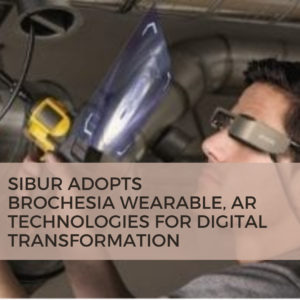
Sibur Adopts Brochesia Wearable, AR Technologies For Digital Transformation

This is one of the Digital Transformation processes that will lead the Russian company to the Industry 4.0 era, based on automation and data exchange in manufacturing technologies.

Sibur chose Brochesia’s B View solution to empower its production processes, especially maintenance and support services through Augmented Reality and Remote Assistance.

As Alexander Leus, Sibur’s Head of Industry 4.0, commented: “Brochesia is helping us in our journey to digital transformation; they are a very trusted partner with a consolidated experience in AR software solutions and smart glasses. The Network Modernization-Digitalization project is just beginning but we can see the first positive outcomes: since we have adopted the B View solution we saved in time and money when doing activities in our production plants. Moreover we could decrease travels of the most experienced technicians as well as of our suppliers who are now able to give their advices remotely.

Finally we are exploring new possible applications of Brochesia software in the company. I’m sure they can give us the right tools to enhance our Digital Transformation, improving both our production process and business performance”.

In the face of a difficult epidemiological situation, the necessity of smart glasses and augmented reality at the enterprises has increased significantly. Regular repair works require an external examination, but the contractors cannot come from abroad right now, or they ought to wait for 2 weeks of quarantine. Due to the technology all external experts from abroad – Serbia, Italy, Korea, Belgium, France – and other regions of Russia can be brought aboard remotely

Read the original article on Chemical Engineering.


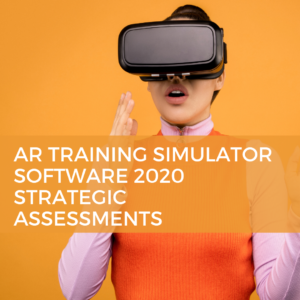
AR Training Simulator Software 2020 Strategic Assessments – Proximie, Upskill, Imaginate, SimX

AR training simulator software are intended to train users for a certain role in a partially virtual environment. Trainees utilize the augmented reality in these solutions to learn the vital skills needed for a new job. These differ from virtual reality training simulators, as the latter provides training simulations to users in a completely immersive, virtual environment. By integrating 3D images into the real world using a phone or other mobile device with a camera, AR training simulators replicate real-life situations, which makes the learning experience more retainable and engaging.

Market Drivers include increasing Demand for AI-Based Applications.  Growing Interest of the Large Tech Companies in AR Training Simulation.  And thirdly, rising demand in Training and Skill Development by Various Companies to Train Employees for Certain Jobs.

Market Trends include High Adoption Of 3D visualization In Medical Sector and an upsurge in Demand from AI-based Applications in Retail and E-commerce Sector

Restraints revolve around Limited User Interface (UI) Affecting the Navigation Performance of AR Applications

Opportunities include Rising Expenditure in Training Simulation Technology. Technological Advancement and Development in the AR and Rising Adoption of the AI Technology

Current Challenges were found to be Low Adoption Rate due to Privacy Issues and Complexities in the Design and a lack of Skilled Working Professionals

Free Sample Report request link.


Scope AR Cofounder and CEO discusses how the coronavirus is strengthening the case for enterprise AR

The business disruptions caused by the pandemic highlight an opportunity for augmented reality (AR) tech firms to step in and help organizations maintain operations.

AR’s ability to link the digital and physical worlds and empower real-world collaboration makes it primed to preserve enterprise operations in this time of need. Already, companies are racing to embrace AR technology — and we think we could see a lasting impact on enterprise AR adoption that extends beyond the pandemic.

Business Insider Intelligence spoke to Scott Montgomerie, cofounder and CEO of Scope AR, to discuss the impacts of the coronavirus pandemic on Scope AR’s business and how the firm is strategizing in response.

Through our conversation, we discussed what has changed for Scope AR in the past few weeks, how companies such as telecoms are changing their business strategies amid the crisis, and what these changes mean for the enterprise AR industry in the long term.

Read the interview on Business Insider.


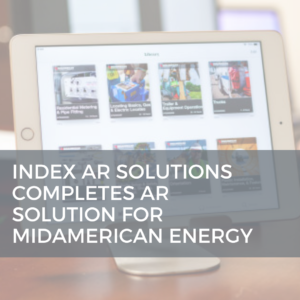
Index AR Solutions Announces Completion of Gas Technician Apprenticeship Two-Year Training Program Modernization for MidAmerican Energy

The digital curriculum components are available now for purchase by other utilities, with pricing and terms based on a co-marketing agreement.

MidAmerican is a subsidiary of Berkshire Hathaway Energy that serves 791,000 electric and 771,000 natural gas customers in Iowa, Illinois, South Dakota and Nebraska. As the cornerstone of a project to combine two time-based apprenticeship programs into a single, competency-based hybrid program, MidAmerican’s new digital curriculum is now being used to train all its gas technician apprentices.

Index AR Solutions worked side-by-side with MidAmerican trainers during the modernization effort, pairing AR and eBook learning tools to create a highly experiential learning platform with rich visual, auditory and tactile elements. Company operating standards and safety rules are also included for reference and contextually embedded into step-by-step procedures.

The curriculum is divided into four six-month phases built around interactive eBook multimedia learning experiences that are loaded on each apprentice’s work tablet for use during instructor-led classroom training, remote self-study and field work. Visual augmentations, 3D animations and detailed schematics teach apprentices how to identify key parts or complete common tasks. The augmentations also walk the apprentice through what PPE and tools are needed for each step and overlay critical information on to the area they are working.

Instructional videos are also embedded into the eBook modules, each one featuring MidAmerican’s own represented workforce. The videos emphasize the importance of safety and commitment to customer service – with seasoned workers who share wisdom and real-world stories from the field.

“Backed by the AR apps, videos and other rich content, the eBooks have become a valuable repository of our workforce’s knowledge, while also training and developing our future journeymen,” said Mike Hoff, director of business optimization and innovation at MidAmerican Energy Company.

MidAmerican expects to also benefit from the portability of the digital curriculum. Since content is downloaded to their company-issued Apple iPads, apprentices engage the material for training or field reference immediately. Training initiatives now take place consistently across geographically distributed teams, even in the event of business disruptions.

“Index is proud to work with innovative companies like MidAmerican who are using technology to chart the future of workforce education, and we look forward to partnering with other forward-thinking utilities who wish to augment their own workers – from the classroom to the field,” said Dan Arczynski, CEO, Index AR Solutions.

For more information, including product videos, data sheets, case studies and media coverage, please visit Index AR Solutions.


Working in a Multi CAD Supply Chain

In today’s engineering and manufacturing environment, products, especially large complex ones such as planes or cars, are not made by one manufacturer. Companies have to collaborate and very often that means that your CAD and PLM data has to be shared. Nearly all products involve complex and multi-continent supply chains, which often use different CAD and PLM tools for design and manufacturing.

Different CAD systems may be used by different companies which can cause incompatibility issues when it comes to sharing data from one system to another. But those who manufacture many different parts for many different products can’t be expected to have the same CAD system that everybody else in each of their supply chains have.

To overcome the problem of sharing incompatible data, some companies will buy a specific seat of a different CAD system, just so they can access the data being sent; but this can be expensive, and require a member of the team to be specially trained. So it’s not always the best option, especially for smaller companies.  And even if you’ve spent the time and money on doing this, the data still might need to be accessed in another different CAD system further down the supply chain.

Data Exchange

CAD/PLM data exchange is the process which supports the movement of 3D design data, metadata and supporting documents between collaborating design, engineering, and manufacturing companies. It is often a bi-directional process, where data iterates between collaborating partners, but in some cases may just involve the creation of data for the manufacture or analysis of parts.

Translation

The obvious option is to be able to simply translate your 3D CAD data from one system to the other. Data translators are available that enable data exchange and sharing of incompatible data formats. They are a high quality, cost-effective method of exchanging data between CAD or visualization systems and remove the need to buy additional CAD seats, as they can be used interactively from within your vendor specific application.

If using a translator, especially a bi-directional one, there are a few points to think about in relation to the sending and receiving of data to make sure the translation is as seamless as possible.

When sending data

  • Send only high quality data
  • Know what your data will be used for and only send lightweight data if possible
  • Send only the data that the recipient needs
  • Think about whether features and history are definitely required.

When receiving data

  • Know what you expect to receive and check it when you get it
  • Understand what you have received
  • Treat incoming data with care
  • Only translate what you need


The ideal solution would be the removal of the process altogether to remove the need for data translation. However, just as it is unrealistic to expect the whole world to speak the same language, for all CAD data to held in the same format is very unlikely to happen.

There is no one size fits all solution for Data Exchange, so thought needs to be given to the type of data and its content, whether it’s for manufacturing, viewing only, or if it needs simplifying to protect intellectual property and to what data exchange solution would fit that purpose.

Read Theorem Solution Blog 

Read Theorem Solution AREA member profile