The AREA Welcomes ShapesXR as a Member

Shapes XR

The Augmented Reality for Enterprise Alliance (AREA) today announced that ShapesXR has joined the consortium.

ShapesXR is an enterprise-focused, collaborative design platform built to accelerate 3D prototyping and spatial design across organizations. Used by industry leaders such as Mayo Clinic, Mondelez, Chanel, and Microsoft, it enables cross-functional teams to rapidly ideate, iterate, and communicate spatial concepts, including VR training scenarios and AR remote assistance. By bridging the gap between design and development, ShapesXR helps enterprises reduce time-to-market, minimize costly misalignments, and align stakeholders more effectively around shared visions.

As part of our commitment to advancing enterprise AR, ShapesXR has joined the AREA . The AREA provides a highly curated network of AR experts, structured engagement opportunities through workshops and working groups, and a platform to exchange best practices in human-centered design and spatial computing. It also offers valuable visibility for our solutions among decision-makers and thought leaders, as well as access to a wide range of member-exclusive resources. Joining the AREA reinforces our focus on shaping the future of immersive collaboration for the enterprise sector.

“By joining the AREA, we aim to contribute to the advancement of enterprise AR by supporting the creation of high-quality spatial content. As a creative tool purpose-built for designing XR experiences, ShapesXR is committed to empowering teams to bring their ideas to life and shaping the standards for immersive collaboration across industries.”

“We are proud to announce ShapesXR as a member of the AREA,” said Mark Sage, executive director of AREA. “Their experience with enterprise-focused solutions for 3D prototyping and spatial design is an excellent addition to the AREA as we work on enterprise AR adoption.”

About ShapesXR

ShapesXR is an advanced, collaborative design platform that allows users to prototype products and experiences in 3D within minutes. Its core mission is to democratize 3D content creation, enabling designers, developers, and business stakeholders to ideate, prototype, and communicate in 3D-without requiring prior experience in game engines or coding. For more information, visit https://www.shapesxr.com/.

About the AR for Enterprise Alliance (AREA)

The AR for Enterprise Alliance (AREA) is the only global membership-funded alliance helping to accelerate the adoption of enterprise AR by supporting the growth of a comprehensive ecosystem. The AREA accelerates AR adoption by creating a comprehensive ecosystem for enterprises, providers, and research institutions. AREA is a program of Object Management Group® (OMG®). For more information, visit the AREA website.

Object Management Group and OMG are registered trademarks of the Object Management Group. For a listing of all OMG trademarks, visit https://www.omg.org/legal/tm_list.htm. All other trademarks are the property of their respective owners.


Beyond the Headset: Empowering Frontline Inspections with the Untapped Potential of Voice

Beyond the Headset

Inspections form the bedrock of safe and efficient operations across vital industries like manufacturing, aviation, utilities, and logistics. Yet, all too often, these critical processes are weighed down by the inefficiencies of paper trails, the tedium of manual data entry, and the inconsistencies of human interpretation. As organizations embrace digital transformation, hands-free technologies like voice interfaces and augmented reality are emerging as powerful allies, promising significant gains in safety, accuracy, and overall productivity.

The Augmented Reality for Enterprise Alliance (AREA), a leading voice in the adoption of immersive technologies, recently shed light on this evolution with their report, “The Adoption of Real-Time AR-assisted Inspections for Quality and Compliance”. This insightful report highlights the transformative potential of AR headsets in frontline inspection scenarios. However, the fundamental needs identified within – hands-free access to information, real-time documentation capabilities, and intuitive guided workflows – resonate just as powerfully with the ruggedized mobile devices that remain the workhorse platform for a vast majority of frontline teams.

The Voice Advantage: Adding a Layer of Seamless Efficiency to Inspections

While AR offers a visually immersive experience, voice interfaces provide an equally compelling – and often more readily deployable – pathway to hands-free operation. Imagine inspection teams, whether clad in gloves or navigating complex machinery, interacting effortlessly with their devices simply by speaking. This capability translates directly into tangible benefits:

  • Enhanced Safety: By freeing up hands and eyes, voice interfaces allow workers to maintain complete situational awareness, crucial in potentially hazardous environments. No more fumbling with screens or looking down to input data.
  • Boosted Productivity: Voice commands streamline workflows, accelerate data capture, and provide instant access to information, significantly reducing the time spent on each inspection.
  • Improved Accuracy: Verbal confirmations and dictation minimize errors associated with manual data entry and ensure consistent adherence to protocols.
  • Reduced Cognitive Load: Voice-guided workflows and hands-free data input allow inspectors to focus on the task at hand, reducing mental fatigue and improving the quality of their observations.

Drawing inspiration from the AREA report, several compelling voice-enablement use cases emerge that directly address the evolving needs of industries where frontline workers often operate in challenging conditions. These applications aren’t confined to the realm of AR headsets; they seamlessly integrate with the ruggedized mobile devices already deployed across field service, logistics, and industrial landscapes. Voice interfaces provide a natural and intuitive way for workers to navigate complex procedures, capture critical data in real-time, and access essential information without ever breaking their stride or compromising their focus. And when powered by robust on-device speech recognition, these advantages are delivered with unwavering reliability and security, even in noisy, offline, or sensitive environments.

Unlocking Efficiency: Key Voice Use Cases for Inspection Workflows

  1. Voice-Driven Digital Checklists: Ensuring Safety and Compliance, Hands-Free
  • How it works: Replace cumbersome paper-based forms and error-prone on-screen taps with simple verbal confirmations. Voice prompts guide inspectors through each required step, demanding spoken verification to ensure thoroughness and adherence to regulations.
  • Value: Dramatically enhances safety protocols, improves inspection accuracy by ensuring no steps are missed, accelerates the process, and reduces the mental burden on inspectors.
  1. Voice-Activated App Navigation and Control: Keeping Focus Where it Matters Most
  • How it works: Empower workers to navigate intricate inspection workflows or access digital Standard Operating Procedures (SOPs) using intuitive voice commands.
  • Value: Preserves critical focus and maintains complete situational awareness, significantly mitigating the risk of accidents, especially in potentially hazardous operational zones.
  1. Voice-Based Data Entry and Inspection Logging: Capturing Insights in Real-Time
  • How it works: Enable inspectors to verbally dictate their findings, observations, and log inspection results directly while performing the task.
  • Value: Eliminates the redundant and time-consuming step of manual data entry, significantly improves the accuracy and immediacy of documentation, and creates a robust and easily auditable trail of inspections.
  1. Voice Search for Critical Reference Material: Knowledge at the Speed of Speech
  • How it works: Allow frontline teams to instantly retrieve essential manuals, detailed procedures, or historical inspection reports using simple voice commands.
  • Value: Minimizes operational downtime caused by searching for information and provides immediate access to the critical knowledge needed to make informed decisions in the field.
  1. Guided Procedures with Voice Interaction: Ensuring Consistency and Accelerating Training
  • How it works: Voice interfaces can provide clear, step-by-step verbal guidance through complex inspection workflows, acting as a virtual assistant.
  • Value: Significantly accelerates the onboarding process for new technicians and ensures consistent adherence to best practices across all inspections, regardless of experience level.

The Undeniable Value of On-Device Processing for Inspections

In the demanding environments where inspections take place, the advantages of on-device voice processing become even more pronounced. Eliminating the reliance on often unreliable or unavailable network connectivity in industrial facilities, remote sites, or high-security zones is paramount. On-device speech recognition guarantees immediate response times, keeps sensitive inspection data secure within the device, and reduces dependence on complex backend infrastructure. This translates directly into greater operational reliability, significantly lower latency, and a safer, more efficient experience for every frontline worker.


Keen Research provides the cutting-edge KeenASR SDK to voice-enable your frontline workflows. Contact us today at https://keenresearch.com or [email protected] to discuss your needs.


Augment IT Breaks New Ground with Paraverse-Platform for Paraplegics and Prepares it for Apple Vision Pro

Augment IT, a leading international Extended Reality (XR) company, continues to develop the groundbreaking Paraverse platform for AR devices. The platform, which is specifically tailored to the needs of paraplegics, is already available for Magic Leap 2 and will be optimized for use with Apple Vision Pro.

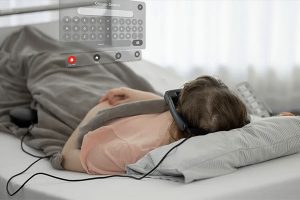
Augment IT developed the Paraverse platform on the initiative of the Swiss Paraplegic Center (SPC) and tested it in close collaboration. Over more than a year, the team gained valuable insight into what tetraplegics and paraplegics need and how those needs can best be met.  People with spinal cord injuries are currently confined to their beds and require constant assistance, even turning a page in a book.

Paraverse-Platform for Paraplegics and Prepares it for Apple Vision Pro

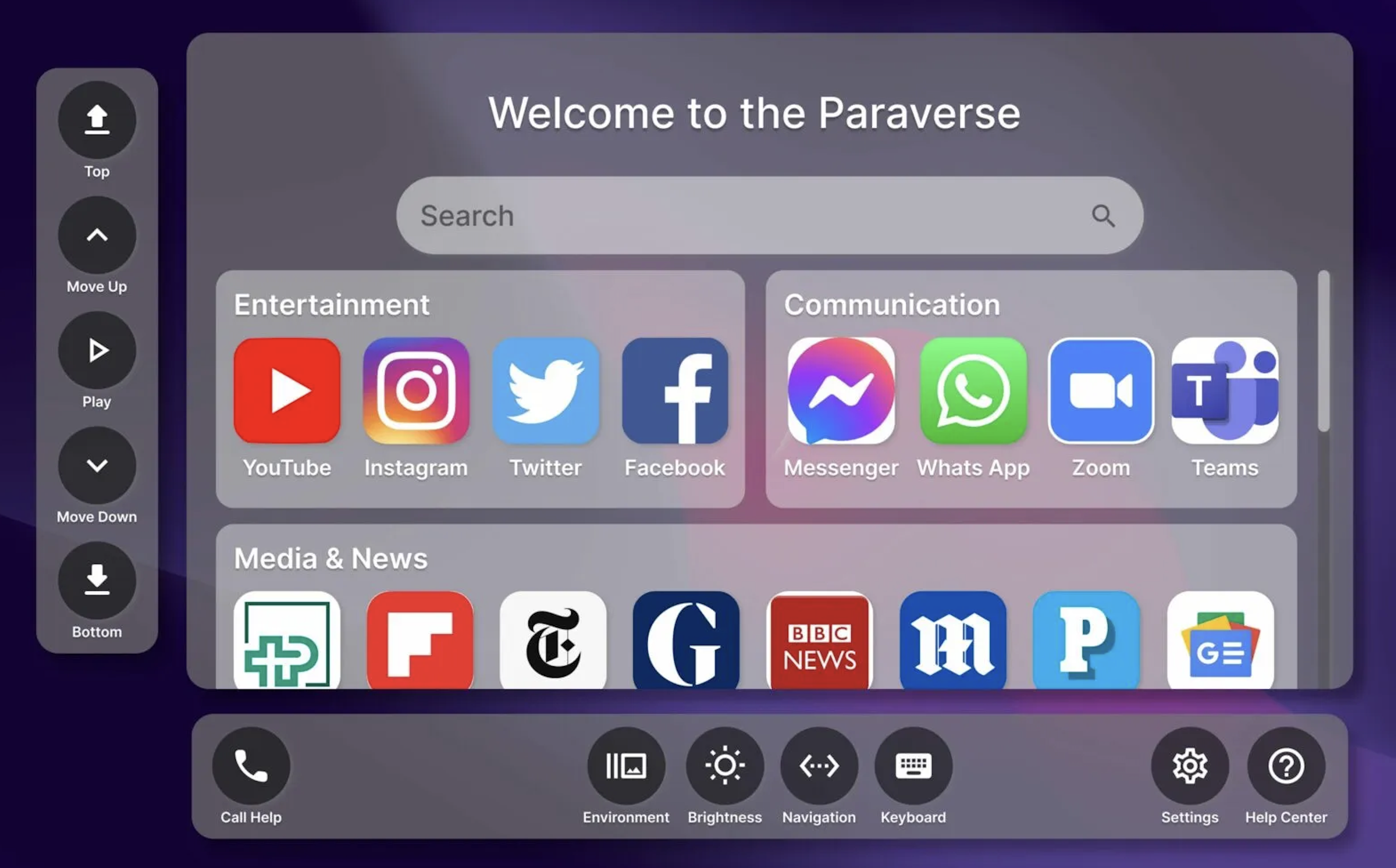
This image is a screenshot of the product and may not represent the final version.


The Paraverse-platform provides users with barrier-free access to the digital world. This includes core functions such as making phone calls, reading messages, surfing the Internet, or continuing education and entertainment on video platforms – all controlled with the eyes.

In addition, high-resolution panoramic photos, and videos, especially the Vision Pro’s 3D videos, allow you to relive memories in a whole new way – as if you’re part of the experience. With the new 3D Personas, users can connect with family and friends outside the clinical environment using FaceTime or Microsoft Teams and thus maintain relationships.

Apple Vision Pro’s precise eye tracking allows them to make decisions completely on their own. This greatly enhances their quality of life. Privacy is also protected because, unlike traditional screens, only the patient is able to see the content in the headset.

The feedback from the limited number of initial trials of the Apple Vision Pro has been very encouraging. Patients have been very enthusiastic, and we have gained valuable insights for further development this year.

The goal is to make the platform available to hospitals and specialty clinics worldwide. The software currently runs on the Magic Leap 2 and will soon be available for the Apple Vision Pro.

Luca Jelmoni, CEO of SPC, emphasizes the importance of the Paraverse platform for patients: “The possibilities to communicate with their loved ones, reflect on experiences, learn new things independently, or transform the space you see every day into a completely new world – these possibilities can transform and significantly enrich the lives of our patients.”

The Paraverse platform is more than just a technological innovation. It improves the quality of life and can be a great help in coping with everyday life, especially in the beginning. This enormous added value has been confirmed several times by patients in the early stages of the project. The product is now being continuously developed and will gradually be made available to other clinics.

Reto Grob, CEO of Augment IT, is especially pleased with the positive feedback: “It was clear to us that immersive technologies create entirely new user experiences in many application areas. Paraverse is an initiative close to our heart because the value for the user is enormous. We have already proven this with Magic Leap 2 – and now with the launch of Apple Vision Pro, we have another technically outstanding platform in our long-term plan to significantly improve the lives of people with disabilities.”

About Augment IT
Augment IT is a leading international company in the field of Extended Reality (XR) with a clear focus on industry, transportation, and healthcare. The company delivers innovative XR software solutions that create real value for its customers. With well-known customers such as ÖBB, Hilti, and Arxada, and offices in Switzerland, Germany, and North Macedonia, Augment IT is consolidating its position as an ambitious XR start-up.