AR Provider Rokid Raises $160m Series C Funding to Expand Globally

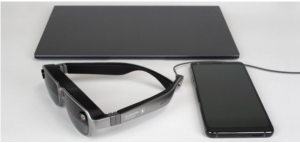
Chinese startup Rokid has been through a few stages of transformation over its eight years of existence.  The Temasek-backed company started out as a smart speaker maker when the vertical was all the rage in China in mid-2015s, but it has in recent years put more focus on Augmented Reality.

This week, Rokid said it has secured a $160 million Series C round, lifting its total capital raised to $378 million.

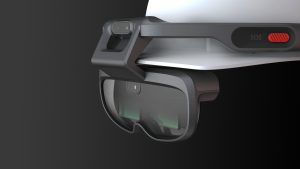
Rokid has been exploring enterprise use cases, like enabling remote communication for field workers in the auto, oil and gas, and other traditional industries. Its X-Craft headset, for instance, is resistant to explosions, water and dust and comes with 5G and GPS capabilities.

During the COVID19 pandemic Rokid pitched smart glasses that could detect temperatures of up to 200 people within two minutes.

With a team of about 380 employees, Rokid said it will spend the new proceeds on research and development as well as global expansion, so developed markets could be expecting more of Rokid’s B2B offerings. Indeed, the firm just hired an energy industry veteran to head its sales in the APAC region.

The AREA sends our congratulations on this expansion.

Find out more about Rokid on the Rokid inc AREA member profile.


Operating Room Usage of Vuzix Smart Glasses Continues to Expand Via Solution Providers Pixee Medical and Rods&Cones

Yesterday, Pixee Medical announced that its Knee+ AR computer-assisted orthopedic solution will be commercially launched in the United States, providing a perfect fit for Ambulatory Surgical Centers (ASCs). Launched in Europe and Australia early in 2021, Pixee’s solution will be formally launched in the US at the American Association of Orthopaedic Surgeons (AAOS) Annual Meeting on March 22-26 in Chicago, where the company will meet with surgeons and finalize the organization of its distribution channel.

Additionally, Pixee Medical added that it will soon be adding new features to its Knee+ platform, with soft tissue balancing, kinematic alignment and data connectivity. It will also be expanding its portfolio with a mixed reality product for total shoulder arthroplasty and with an easy-to-use cup orientation and leg length controlling AR tool for total hip arthroplasty. Knee+ is also now compatible with surgical hoods.

Rods&Cones has been a growing consumer of Vuzix M400 smart glasses, which let staff in the operating room, ICU or other medical facility, including surgeons, instrumentalist nurses and other healthcare professionals, provide 4K broadcast quality imagery to others while interacting with patients and staff from a safe distance. To date, Rods&Cones is active in more than 600 hospitals across more than 30 countries and the company anticipates that 2022 will be the year when companies and medical providers start changing their models to prioritize remote technology at the heart of their operations.

Rods&Cones recently announced that its remote access service is compatible with the Pixee Knee+ augmented reality solution for total knee arthroplasty. The compatibility of the two solutions is expected to allow surgeons to use augmented reality during total knee arthroplasty surgeries, while also connecting remotely with other medical experts around the world.

“Firms like Pixee Medical and Rods&Cones are innovators within the healthcare sector and their solutions are facilitating communications and learning, reducing costs, and improving outcomes in operating rooms around the world with the help of Vuzix smart glasses,” said Paul Travers, President and Chief Executive Officer at Vuzix. We look forward to working with these and other providers to help transform the healthcare industry in 2022 and beyond.


Qualcomm Launches $100M Snapdragon Metaverse Fund

Qualcomm Incorporated announced on March 21 2022 the launch of the Snapdragon Metaverse Fund, established to invest up to $100 million in developers and companies building unique, immersive XR experiences, as well as associated core augmented reality (AR) and related artificial intelligence (AI) technologies. The fund plans to deploy capital through a combination of venture investments in leading XR companies by Qualcomm Ventures and a grant program by Qualcomm Technologies, Inc. for developer ecosystem funding in XR experiences such as gaming, health and wellness, media, entertainment, education, and enterprise.

“We deliver the groundbreaking platform technology and experiences that will enable both the consumer and the enterprise to build and engage in the metaverse and allow the physical and digital worlds to be connected. Qualcomm is the ticket to the metaverse,” said Cristiano Amon, president and CEO of Qualcomm Incorporated. “Through the Snapdragon Metaverse Fund, we look forward to empowering developers and companies of all sizes as they push boundaries of what’s possible as we enter into this new generation of spatial computing.”

Qualcomm Technologies has been a key contributor in every major computing evolution and is a leader in core technologies such as 5G, AI and XR – all of which are critical to the metaverse. As we enter the new era of spatial computing, the Snapdragon Metaverse Fund will help enable and foster innovation across the entire ecosystem through venture investment and developer ecosystem grants for content projects.  In addition, recipients may have the opportunity to gain early access to cutting-edge XR platform technology, hardware kits, a global network of investors, and co-marketing and promotion opportunities.

Companies and developers who are interested to learn more can visit qualcomm.com/metaverse-fund. Applications for the Snapdragon Metaverse Fund will officially open in June.


About Qualcomm

Qualcomm is the world’s leading wireless technology innovator and the driving force behind the development, launch, and expansion of 5G. When we connected the phone to the internet, the mobile revolution was born. Today, our foundational technologies enable the mobile ecosystem and are found in every 3G, 4G and 5G smartphone. We bring the benefits of mobile to new industries, including automotive, the internet of things, and computing, and are leading the way to a world where everything and everyone can communicate and interact seamlessly.

Qualcomm Incorporated includes our licensing business, QTL, and the vast majority of our patent portfolio. Qualcomm Technologies, Inc., a subsidiary of Qualcomm Incorporated, operates, along with its subsidiaries, substantially all of our engineering, research, and development functions, and substantially all of our products and services businesses, including our QCT semiconductor business.


Scope AR Has Become a Siemens Digital Industries Software Partner

“We are ecstatic to offer this leading PLM technology integration to our current and future customers,” said Scott Montgomerie, Co-founder and CEO. “Streamlining the creation of AR experiences from PLM systems is an integral part of the digital thread. With the connection between Teamcenter and WorkLink, that vision is now a reality. We launched WorkLink Create to give the world the fastest AR authoring and publishing experience possible. That experience is now seamlessly connected to the world’s most widely used PLM system, and this integration unlocks limitless use cases for our shared customers.”

From its founding, Scope AR has improved the way people work with technology that accelerates the sharing of specific knowledge. In 2010, Scope AR’s founders saw the power augmented reality had to make anyone an expert, regardless of how complex the task. To harness that power, they developed WorkLink, a platform that transforms the way enterprises manufacture, inspect, test and train their workforce through step-by-step 3D visual guidance. WorkLink enables higher workforce productivity with better training, less rework, and higher compliance.

WorkLink has been proven transformational in hundreds of use cases and industries, and makes it easy for leading organizations like Johnson & Johnson, Mitsubishi, Lockheed Martin, Northrop Grumman, Honeywell and others to create and distribute powerful AR content in minutes across a wide array of devices. In addition to Siemens Digital Industries, Scope AR partners with technology leaders such as Microsoft, Google, Amazon, ServiceMax, Unity, NTT Data and more.


Global Smart Augmented Reality (AR) Glasses Market to Reach 8.8 Million Units by the Year 2026

AR/VR smart glasses have the capability to improve and also take the place of current technology solutions in supply chains.

Organizations using AR wearable electronics are showing applications that result in improvements in productivity, efficiency, and also compliance.

The market is expected to gain from the developments in machine vision and AI and also analytics and big data. Object and face tracking enhancements, voice recognition and other capabilities will augment the adoption of AR and VR. The AR/VR smart glasses market is also expected to gain from the Industry 4.0 and the growing interest in AR/VR technology among gamers.

Also, the implementation of 5G technology and increasing digitization are likely to drive gains in the market.

Amid the COVID-19 crisis, the global market for Smart Augmented Reality (AR) Glasses estimated at 721 Thousand Units in the year 2022, is projected to reach a revised size of 8.8 Million Units by 2026, growing at a CAGR of 80.3% over the analysis period.

This and other trends are analyzed in the recent report which can be requested here >>

Global Smart Augmented Reality (AR) Glasses Market to Reach 8.8 Million Units by the Year 2026 


Choosing your AR Smart Glasses Vendor in 2022

However, while smartphone apps can give us a taste of the benefits AR can offer, there’s a whole new world of opportunities available when we explore AR wearables.

Augmented Reality glasses are becoming an increasingly exciting concept, particularly as numerous brands like Apple and Meta (previously Facebook) discuss introducing their own fashionable versions.

With unit sales expecting to reach around 3.9 million by 2024, many companies will be wondering how to pick the ideal vendor for their own AR smart glasses investment.

The article talks through the things to consider in detail when choosing a wearable AR solution.

  1. What do you need AR smart glasses for?
  2. What are your crucial features?
  3. Prioritise comfort and ease of use
  4. Research the vendor

The original article can be read in full here. 

Many of AREA’s members are providers of AR smartglasses and other wearable technology – see our full member list here


Fortune 50 Online Retailer Places Follow-on Order for Vuzix Smart Glasses to Support Expanding Warehouse Usage

This order follows the successful completion of a proof-of-concept (POC) earlier last year in one warehouse and the initial deployment of Vuzix smart glasses in 40 warehouses several months ago. This follow-on order will support the further deployment of glasses to these 40 warehouses as well as initial deployment to additional locations.

“We are pleased to see a customer of this caliber, not only a retailer leader but also an innovative user of new technologies, continue to deploy and actively use Vuzix smart glasses, a proven productivity tool,” said Paul Travers, President and Chief Executive Officer at Vuzix.

“This Fortune 50 customer represents just one of many exciting opportunities within this vertical, and we look forward to working with them, as well as others, to expand both the depth and breadth of Vuzix Smart Glasses usage this year and beyond.”


Mercedes-Benz, Turkey Selects RealWear for Large Scale Deployment Across All 56 Service Centres with Microsoft Teams

London, UK – 22 February 2022 – RealWear, the world’s leading provider of assisted reality solutions for frontline industrial workers, today announced that Mercedes-Benz Otomotiv, based in Turkey, has selected and deployed RealWear’s rugged wearable devices across all of its 56 authorised service centres.

Prior to its countrywide enterprise wearable deployment, the process included hundreds of in-person trips, emails, shared photos and videos and over-the-phone collaboration with subject matter experts. With more than 240,000 customer vehicles on the road and the company’s commitment to high-quality service, the RealWear deployment immediately resulted in wide-ranging positive impact from cost savings, carbon footprint reduction to efficiency and worker empowerment.

For Mercedes-Benz, speed is everything, including a timely response and resolution to its customers. Any issues that could not be resolved required technical support staff to schedule and physically visit the dealership, costing the firm around an expected $100k and 500 tons of carbon emissions per year.

Since initially deploying the technology, Mercedes-Benz Otomotiv anticipates a 25% jump in ROI for on-part training scenarios and up to an expected 80% performance increase in customer service centre technical problem resolution where expertise from HQ is required. Certain other processes, such as problematic warranty cases and insurance claims have also become far more efficient using RealWear’s devices.

“Technologies such as RealWear and Microsoft Teams further increase the service quality and speed of Mercedes-Benz, thus positively affecting our customer satisfaction.” said Celal Tuna, Technical Support Supervisor at Mercedes-Benz Otomotiv.

You can read the full press release including the story of Mercedes Benz’s search for an enterprise wearable for its technicians which began in May 2020 on the RealWear website.

See RealWear’s AREA member profile


AR Instructor for the HoloLens 2 is now available from Arvizio

AR Instructor is a comprehensive software solution comprised of the following key elements:

AR Instructor Authoring App: a Windows-based application used to create guided work instruction.

The Authoring application offers users tools to easily create a set of digital procedures, each with step-by-step instructions, and insert associated documentation, videos, images, annotations, and 3D models where additional clarification may be helpful.

AR Instructor App: an application for HoloLens 2

The AR Instructor app allows technicians to utilize AR content and overlay structured step-by-step instructions, with integrated documentation, media, and 3D models, on the physical site to perform repair, maintenance, installation, and other operational activities. AR users can conduct live video calls with a remote expert for additional guidance or performance audit.

Support for other AR devices (mobile, lightweight glasses) is planned for Q2 this year.

Arvizio Remote Expert: Web-based tools used by remote experts to assist field workers.

The Remote Expert capability enables live see-what-I-see video calls including augmented reality annotations, shared images and screenshots for visual interaction with the on-site worker to offer additional guidance and/or audit the performance of operational tasks.

AR Instructor provides on-the-job guidance using previously prepared step-by-step augmented reality instructions. Visual prompts and AR overlays guide the user as they execute a given set of tasks. Each step of a guided workflow can be illustrated with video, documents, images, and 3D models superimposed on objects in the user’s field of view.


AR Instructor also offers real-time collaboration allowing field workers and remote experts to share information and receive critical guidance when required. Connecting with remote experts allows the expert to view, collaborate, and instruct the on-site employee using captured photographs, video and annotations through direct audio and video interaction. Specific procedures requiring expert assistance for work validation, or additional oversight, can be seamlessly incorporated in the workflow.

“AR Instructor is an efficient solution for organizations to utilize augmented reality in their operational and field maintenance activities. Using HoloLens 2, clear instructions, 3D content, media and remote expert support are in the worker’s field of view, enabling hands-free operation and significantly increased productivity”, said Jonathan Reeves, CEO of Arvizio. “In addition, senior employees are often not located where operations are performed. With AR Instructor’s remote expert capabilities, these experts can see exactly what engineers and field technicians see and collaborate with them reducing the time to resolution without costly travel.”

AR Instructor offers significant benefits to a variety of industries including manufacturing, datacenter, telecoms, aerospace, and energy. Integrated AR content as well as flexible user management enable organizations to vastly increase productivity, reduce operational costs, optimize their resources, improve competency and safety, and reduce training costs.

The AR Instructor app for HoloLens 2 is available in the Microsoft Store as part of the comprehensive AR Instructor solution. To watch a brief video overview of AR Instructor, please visit: Arvizio AR Instructor: Step-By-Step Instruction in AR

In addition to AR Instructor, the company’s Immerse 3D solution offers 3D model visualization and multi-user meetings and reviews with 3D BIM/CAD models, photogrammetry models and LiDAR point clouds across locations.


UK enterprises look to 5G to alleviate Covid-19 business pressures – EY

The EY Reimagining industry futures study revealed that 80% of respondents say the impact of the global health crisis is driving their interest in 5G, up from 62% in last year’s study.

EY’s study showed that 79% of respondents say supply chain disruption has galvanized their 5G pursuit, while 68% cite the focus on environmental, social and governance (ESG) issues. However, 40% are concerned that 5G and internet of things (IoT) vendors’ current use cases do not meet their business resilience and continuity needs, and 51% do not think their sustainability goals are addressed by today’s use cases.

Advanced 5G use cases featuring virtual or augmented reality are cited by just 22% of U.K. respondents as a key application, compared to 49% who favor process optimization.

Praveen Shankar, EY UK and Ireland technology, nedia and telecoms leader, said: “While the hype around how 5G low latency could power the metaverse or commercialize augmented reality continues to build, the study shows that the technology has moved out of its infancy, with enterprises’ interest now fuelled by real-world challenges. This should be applauded, with 5G following the same innovation cycle of other transformative technologies. Sophisticated use cases will become important in time. More pressing, however, is the need for 5G providers to adapt their solutions to the practical demands of industry 4.0 today.”

5G leads all other emerging technologies tracked in the study in terms of future spending intentions, with more than half (56%) of U.K. businesses planning to invest in 5G within the next three years.

However, despite this promising outlook in terms of future 5G adoption, enterprises are less confident than before that they can deploy 5G to the best of their ability. Only 18% are very confident that they can successfully implement 5G, down 4% compared to last year.

Adrian Baschnonga, EY global telecommunications lead analyst, said: “There are still fundamental anxieties around how 5G works alongside other emerging technologies. 5G providers should take this on board and adapt their customer discussions accordingly. By educating enterprises on how 5G can be harnessed by other emerging technologies, service providers can boost enterprise confidence in their 5G deployments.”

The study further finds that 71% of U.K. enterprises are interested in using private networks to support implementation of 5G and IoT use cases, while 66% are interested in buying 5G through an intermediary.

EY’s study also revealed that telecoms operators face a significant gap in terms of credibility. Only 13% of enterprises view them as digital transformation experts, down from 19% the previous year. Conversely, 33% trust network equipment vendors as favored digital transformation experts, up from 13% last year.

“Disruptive customer signals suggest that telcos’ traditional relationships with enterprise customers are under pressure and more agile go-to-market strategies are essential in a 5G-IoT world. Telcos should take steps now to ensure that they can meet enterprise demand for private network deployments,” Shankar added.