Ultraleap and Qualcomm announce a multi-year agreement

The leading standalone VR headset, Oculus Quest, has been increasingly focusing on controllerless hand-tracking as a means of input for the device. Other major headset makers, like Microsoft and its HoloLens 2, have also honed in on hand-tracking as a key input method. As industry leaders coalesce around hand-tracking, it becomes increasingly important for competing devices to offer similar functionality.

But hand-tracking isn’t a ‘solved’ problem, making it a challenge for organizations that don’t have the resources of Facebook and Microsoft to work out their own hand-tracking solution.

Ultraleap’s fifth generation hand tracking platform, known as Gemini, will be pre-integrated and optimised on the standalone, untethered Snapdragon XR2 5G reference design, signalling a significant step change for the XR space. The Gemini platform delivers the fastest, most accurate and most robust hand tracking and will provide the most open and accessible platform for developers.

The Snapdragon XR2 5G Platform is the world’s first 5G-supported platform designed specifically for untethered VR, MR and AR (collectively, extended reality or XR). Gemini has been optimised for the Snapdragon XR2 5G platform to allow for an ‘always on’ experience and the most natural interaction in untethered XR.

Steve Cliffe, CEO of Ultraleap, said: “Qualcomm Technologies recognises the importance of high-precision hand tracking in order to revolutionise interaction in XR. The compatibility of our technology with the Snapdragon XR2 5G Platform will make the process of designing hand tracking within a very wide variety of products as simple as pick and place. Qualcomm Technologies is in the position to bring transformation to XR by making state-of-the-art technologies – including 5G and spatial computing – available to a broad market. We are proud to be at the forefront of this fast-growing ecosystem alongside them.”

Hiren Bhinde, Director of Product Management, Qualcomm Technologies, Inc., said: “Hand tracking is becoming a table stakes feature in next-gen XR devices. True immersive XR experiences require seamless, natural and intuitive usage and interaction of the users’ hand when interacting in the digital world as they do in the physical world. Ultraleap’s hand tracking technology enables this seamless interaction through a natural connection between people and technology, which is incredibly important for the next generation of XR devices. We are excited to work with Ultraleap to help deliver more immersive experiences on the Snapdragon XR2 5G reference design.”

Read the original Ultraleap news press release here 


What The Future Of Manufacturing Could Look Like With AR/VR (Forbes)

Our community of readers interested in AR in the enterprise are likely to be interested in a recent article in Forbes Technology Council from the experience and perspective of Dan Gamota, working at a high-tech lab co-located in a Silicon Valley innovation center.

!Going to work was an opportunity to be fully immersed in a continuous learning environment with cutting-edge technologies and some of the best minds in engineering, science and manufacturing. Until, of course, the day we shifted to a work-from-home model.  Overnight, we were separated from each other as well as our vital lab hardware, software and tools. Yet we still are developing dozens of critical manufacturing processes, many of which have been transferred, deployed and audited in factories and facilities all over the world.”

The team moved on despite the pandemic with seamless collaboration and accelerate innovation, by collectively reaching for thier augmented reality and virtual reality (AR/VR) headsets.

These tools already have proven indispensable for training production-line operators while guiding them through complex manufacturing operations. In Singapore, for instance, a team of engineers working in our additive manufacturing center uses AR to reduce training time by 50% on complex 3D printers. Similarly, AR helps speed maintenance instruction training and facilitates remote support. Topcs covered in the article include Building Cyber-Physical Bridges, Innovation Without Boundaries and Advancing Innovation With Avatars.

Read the full original article here.


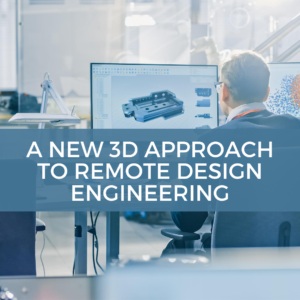
A new 3D approach to remote design engineering

And trying to untangle complex problems remotely from thousands of miles away is fraught with difficulties – even when using products like Microsoft’s Remote Assist. The expert often has to resort to waving their hands around on a screen to communicate to the technician which part of a machine they should be fixing – and which parts should be left alone.

Real-time immersive 3D collaboration is now adding a new dimension to such problem solving – users can share live, complex 3D files such as CAD data, interact with them and reveal ‘hidden’ parts deep within a machine that may be causing an issue. The technology also transforms day-to-day collaboration between remote engineering team members. Design reviews, for example, can be brought to life, with participants ‘walking through’ a model, no matter where they are in the world.


The fundamental problem at the root of many of these issues until now has been that enterprise teams have lacked the ability to effectively collaborate in real time using live, complex 3D data. The solution lies in purpose-built framework technology for integrating natively real-time collaboration and immersive device support directly into legacy enterprise software packages.

The key to enabling true real-time collaboration is to start where the data ‘sits’ and ensure that this original data ‘truth’ is the same for everybody when working together, no matter where they are located or what device they wish to use. This way, everyone in the team has the correct and most up-to-date information available.

Whether it is a CAD package, PLM software, an MRI scanner, robotic simulation software or a laser scanning system, many industries are becoming increasingly dependent on spatial data types and digital twins. These complex data formats are usually incompatible or just too cumbersome to use ‘as is’ in existing collaboration platforms such as Webex, Skype, Google docs or Slack – all built primarily for 2D data formats such as video, text or images.

Moreover, the legacy software generating the data itself is unlikely to have any in-built real-time collaboration functionality – forcing enterprise users to resort to one of two methods. One option is to manually export the data, carry out a painful and time-consuming reformatting process, then manually import the newly crunched data into some type of third-party standalone collaboration package. The alternative is to ignore the spatial nature of the data entirely and instead screen-grab or render out 2D ‘flat’ images of the original 3D data for use in a basic PowerPoint presentation or something similar.

Neither of these methods allows teams to efficiently collaborate using a live data truth – i.e. the original data itself instead of a reformatted, already out-of-date interpretation of it. So, both methods only compound the root collaboration problem instead of helping to solve it.

The latest generation of real-time immersive 3D collaboration technology is integrated directly into the host software, grabbing the original data at source before efficiently pushing it into a real-time environment which users can access using their choice of device (VR, AR, desktop, browser or mobile) for instant and intuitive collaboration. End-to-end encryption ensures that even the most sensitive data may be confidently shared across remote locations.

The integration into the host package provides not only a live connection to the data but also a bi-directional connection, meaning that users are still connected to the host software package running in the background. The advantage of this over standalone applications is that it still gives access to core features of the host package – enabling accurate measurement of a CAD model using vertex or spline snapping to the original B-Rep held in the CAD package, for example. All the underlying metadata from the host package is also available to the immersive experience – and annotations, snapshots, action lists or spatial co-ordinate changes can be saved back into the host package.

The new post-pandemic requirement to have a distributed workforce – in conjunction with the rollout and adoption of key technology enablers such as server-side rendering and high-capacity, low-latency connectivity – is set to accelerate the adoption and integration of real-time immersive collaboration solutions. In the future, 5G technology will also open up the potential to stream to immersive AR and VR devices – untethering the experience and facilitating factory-wide adoption of immersive solutions. For example, as ‘Industrial Internet of Things’ (IIoT) data streams from smart devices in the factory, it will be overlaid via AR glasses in the physical space. And as cloud service providers build out features such as spatial anchoring to support ever-larger physical spaces, these new services will be used within collaborative environments rich with real-time data.

Factory workers, for example, will have the ability to ‘dial an expert’ directly from a virtual panel on a smart factory device. This offsite expert will appear as a holographic colleague and bring with them live 3D data for that individual machine. Both users will have real-time IIoT data overlaid intuitively on the fully interactive 3D model to facilitate a more effective diagnosis and maintenance process.

Empowering shop-floor workers with hands-free AR and detailed 3D data will dramatically improve assembly line efficiency, with an intuitive environment where product data is fully interactive. Users will be able to move, hide, isolate and cross-section through parts, while using mark-up and voice tools to create efficient instructions for the assembly or disassembly of complex products. These instructions will be recorded and delivered as holographic guides via AR directly on the assembly line.

The next generation of real-time immersive 3D collaboration technology is even set to enable you to have a scaled-down hologram of your latest engine design sitting right in front of you on your desk. As you work on the design and refine it using your CAD software, the changes will be dynamically loaded into the hologram so that you can see the effects immediately and make any further necessary adjustments.

Meanwhile, digital sleeving – with 3D images overlaid on physical designs – will enable you to check how two parts of the engine come together, even when they are being designed by different teams in different locations. Similarly, you will be able to see how, for example, cabling will fit inside your latest aircraft seat design or where best to put the maintenance pockets for easy access.

This kind of approach adds a new dimension to the handoff between design and manufacturing. If adjustments need to be made to a fan assembly design, for example, the relevant part can be isolated within an immersive design review – and speech-to-text notes can be added to the part number and automatically become part of the change request. It’s all a far cry from endless design iterations, spreadsheets and printouts – or CAD screen shares using a 2D representation of a 3D problem.

In the post-pandemic remote world, conferencing is bringing people, video and documents together. Collaboration is now adding the fourth dimension of 3D immersive experience to complete the picture.


5 Tips on How AR Smart Glasses Increase Employee Satisfaction – Ubimax

Here are Ubimax’s top 5 tips:

1. SMART GLASSES IMPROVE WORKING ERGONOMICS

Smart glasses allow working with both hands throughout. Tablets or notebooks no longer need to be held in the arm. This takes the strain off many tasks and prevents incorrect posture. Imbalanced strains and joint wear due to permanent one-sided holding of scanners and repetitive movements are avoided. The workflows themselves are structured and often simplified. Unnecessary steps are eliminated.

2. INCREASE OF OCCUPATIONAL SECURITY

The ability to use both hands is a major security advantage of smart glasses. For example, it is a lot safer for a logistics worker to climb a ladder using both hands instead of operating a hand scanner in elevated positions. In addition, warnings about ergonomically questionable situations, for example when unhandy or heavy parts need to be handled as it is often the case in industrial environments, can be displayed directly on the glasses. The punctual display of safety instructions can also reduce the potential of injury in high-risk occupational fields, utilities, or in production through the targeted use of AR devices. Step-by-step instructions increase security by indicating temporary prohibited zones, e.g. for tests in laboratories, or notes on hygiene regulations.

3. WORK FACILITATION THROUGH EXPERT CALLS AND REDUCED TRAVEL ACTIVITIES

Smart glasses enable global collaboration across distances and time zones. In case of problems, experts can easily be consulted via video call on the smart glasses. The expert sees exactly what the employee sees while the employee continues to work hands-free. Collaboration through remote support enables remote training of employees and saves money by reducing the travel expenses of experts. They do not have to travel at short notice but can help their colleagues on site from their own desks. Global collaboration also increases the feeling of belonging and team spirit.

4. ALL AGE GROUPS BENEFIT FROM THE USE OF SMART GLASSES

The use of smart glasses does not only delight young, technology-oriented employees. Older employees also benefit from them. For example, heavy, unwieldy scanners are no longer needed for order picking which makes work easier on the one hand and helps workers achieve their targets faster on the other. Furthermore, smart glasses simplify the inclusion of handicapped workers. The possibility to show instructions step-by-step at the employee’s pace and to carry out a subsequent quality control allows them to participate fully in working life.

5. QUICK ONBOARDING DUE TO EASIER KNOWLEDGE TRANSFER

Onboarding training is simplified due to smart glasses. Step-by-step instructions, automatic quality checks, help and expert support enable employees to work independently and productively a lot faster. This not only makes their daily work easier, but also that of their colleagues who do not have to take on the task of training new colleagues in addition to their own work. There are fewer disappointments and negative experiences which reduces the drop-out rate, and quality and productivity reach the level of experienced colleagues much earlier.


Smart Glasses In Surgery: Expert Analysis Outside The Operating Room

Surgical teams around the world consist of doctors with diverse levels of training, experience and expertise. Sometimes, members of those teams need to consult with a specialist about a surgery they’re performing while the patient is on the operating table, to decide the best steps to take in their care.

Historically, an on-call consultant at a hospital where a surgery is being performed would have to don the necessary personal protective equipment (PPE), head into the theatre and give their verdict. Now, thanks to smart glasses technology, there is a much more efficient route forward.

Iristick, a company that makes smart glasses for industrial purposes, has partnered with Rods&Cones, which focuses on remote assistance in the operating theatre, to create a specialist solution. The two organisations have developed a specially designed pair of smart specs customised for use during surgeries to enhance communication and interaction within an operating theatre.

The smart glasses enable a surgeon to share what they are seeing with a remote specialist. Through the glasses’ microphone, and its two cameras with optical zoom lenses, a consultant outside of the operating room can have an unrestricted, close-up view of a surgery as it progresses. Watching the operation unfold, they have the ability to speak to the surgeon and provide real-time feedback and advice.

As the smart glasses are technically classed as a telecommunications device, rather than a medical one, they haven’t had to seek the European CE approval to start being used in hospitals. Currently, they’re being used in the Netherlands, Belgium, Spain and Italy, with plans for further international expansion.

JUST A QR CODE AWAY

“We keep the surgeon in full control over the communication, while all the handling of the cameras is done by the remote expert,” says Rods&Cones founding partner and CEO Bruno Dheedene.

Let’s say a surgeon is implanting a patient with a device that hasn’t been on the market for long, and which as a result they aren’t overly familiar with. The smart glasses feature a QR code scanner that enables a surgeon to dial-in an on-call expert, perhaps even somebody from the team that developed the new device, simply by looking at the code.

“YOU JUST HAVE TO ASK A CIRCULATORY NURSE FOR THE QR CODE OF THE PERSON YOU WANT TO CALL.”

“You wash your hands, you start the surgery, and half an hour later you want to get some expert advice from a colleague,” says Dheedene. “You just have to ask a circulatory nurse for the QR code of the person you want to call.”

The remote expert will then be able to see everything the surgeon can see through the cameras of the glasses. They’re in full control of and can make enhancements to the footage streamed to them by zooming in, taking pictures and even adjusting the exposure and contrast of the images.

Rods&Cones have also made specific enhancements to the glasses so they can handle X-ray video feeds, the high-contract screens of in-theatre devices and red balance issues.

IMPROVED ACCESS TO EXPERTS, PPE SAVINGS AND A BETTER VIEW

There are a number of advantages to allowing operating surgeons to consult remotely with experts outside of the hospital they’re working in. They have access to a much wider field of specialists than they would otherwise have, and could even speak to multiple people about the same issue if it proves to be particularly complex.

Additionally, the hospital saves on PPE. No one has to gown up to look over a surgery for a few minutes when they can dial-in from outside the room. In the age of Covid-19, when PPE supplies are running low, this is particularly significant. The smart glasses can help to enforce social distancing too, by keeping the number of people inside each operating room that’s currently up and running to a minimum.

The glasses also provide an arguably better view of the surgical field than could be gained from actually being stood in the room. Remote assistants now have what are effectively the best seats in the house.

“Surgery is mostly happening in a very small cavity. If you go into surgery and stand next to the doctor, you won’t be able to see everything he’s doing, because he’s working in between his hands,” says Dheedene.

THE FUTURE OF SMART GLASSES IN SURGERY
Rods&Cones chose to partner with Iristick for the development of the device due to the quality of the glasses the company was already manufacturing.

Alongside the video quality of the intuitively positioned cameras, the glasses are incredibly light at only 70g, meaning they’re unlikely to prove bothersome to wear for long stretches of time. Instead of having hardware weighing the device down Iristick’s glasses are fibreoptic and all streaming and processing is carried out via a module worn in the surgeon’s pocket.

That said, the Rods&Cones software can integrate with other smart glasses too.

“It’s not a mutually exclusive partnership, so in the future we might go in with other partners,” says Dheedene. “We want to adapt existing technology, as far as possible, to the use-case of surgery. We have made our software such that we can integrate with any glass. You just need to put a module in-between, to connect the parameters of our platform and the glass platform.”

Introducing video conferencing to an operating room in such a sophisticated fashion could well be a gamechanger. When it’s possible for operations to be carried out from miles away by utilising a 5G mobile network connection, using a pair of smart glasses to dial-in a consultant when needed seems only logical. With the world being as interconnected as it is, having on-demand access to specialist feedback and advice during an operation is more than just a futuristic luxury – it may, instead, become a daily essential.


Digital twins and predictive maintenance to increase efficiency at Repsol facilities

It was already in 2017 when this alliance was sealed to integrate tools such as the cloud within the oil company , to store the huge amount of data handled by the company. “Digitization is the lever towards the energy transition , ” explained the company’s CIO, Valero Marín, in a meeting with the media. The company has a return in the form of cash flow of € 1 billion until 2022 and an additional € 300 million  until 2020.

The oil company chaired by Antonio Brufau advances in the implementation of data technology, analytical models and artificial intelligence. ” All this allows predictive maintenance and improve the efficiency of operations,” said Marín. “We also explore the use of drones and the blockchain for our operations.”

And a practical example of the use of blockchain is the creation of a certification platform in which Repsol  has integrated its collaborating companies so that there is a record of the operations carried out with suppliers and distributors.
So that employees are not negatively impacted by the advancement of digitization in the company, the company has already trained 2,500 employees in artificial intelligence and another 500 in blockchain.

The oil company contemplates its future with connected and intelligent service stations . An idea that he plans to carry out through the installation of Internet of Things technologies.

The digitization processes will also reach their refineries and plants with facilities that remotely emit information to generate predictive models.

But not only that, both companies are working on the creation of digital twins, that is, data models that would allow analysis and reproduction of a scenario. Given that digital twins are a digital copy of a certain machine, it would allow simulations and understanding the consequences of certain changes, generating scenarios and validating hypotheses.

But the oil company also has a Cloud Competence Center in which more than a hundred professionals specialized in cloud technologies work . Repsol expects 70% of the infrastructure to be in cloud environments by 2022, compared to 30% today, for which it aims to reach a total of 4,000 servers in the cloud.


Víctor de Ávila, CIO of Sacyr, awarded at the ‘CIO of the year Europe’

November 2019 Barcelona hosted the first gala for the CIO of the year in Europe organized by IDG Communications. CIOs from eight European countries have made the final list of the continent’s best, being recognized in a variety of categories including diversity, innovation and sustainability. They have received their awards at a luxurious gala dinner.

The CIO of the Year is the most relevant award that Europe’s IT transformation leaders can achieve.

In total, more than 113 CIOs from 17 countries and various industries submitted applications. A panel of CIOs and experienced journalists studied and evaluated each of the entries, until the final list of winners was chosen.

The winner of the CIO of the Year Europe – Large Company category is Åshild Hanne Larsen from Norway, CIO of Equinor. This category recognizes excellence for CIOs working in a business with 999 or more employees.

Congratulating Åshild Hanne Larsen, Wendy Pfeiffer, CIO of Nutanix, declared the value of “combining the adoption of modern enterprise-class technologies at the consumer level. That’s what great IT does: tailor technology for every industry. to meet the operations and business needs of the company ”.

Speaking about Larsen, CIO UK editor and jury member Edward Qualtrough noted that “the initiatives that Åshild and his team are driving are not only transforming the organization almost from top to bottom, but are also enriching the entire technology and business landscape. in Norway and beyond ”.

The recognized finalists in this category have been Fernando Lucero from Iberdrola, Spain, and Carlo Bozzoli, CIO of Enel in Italy.

In the category of European CIO of the Year – Small and Medium Business , the winning CIO was Morten Gade Christensen from Denmark, CIO of Bankdata. Tesco CTO Guus Dekkers praised what he described as “simple and innovative solutions from Bankdata that have gained traction with customers” as well as its “governance model to drive innovation that ensures accountability.”

Morten was closely followed by Marabu CIO Stefan Würtemberger, recognized for the initiatives and work he did with his team in his previous role at Renz.

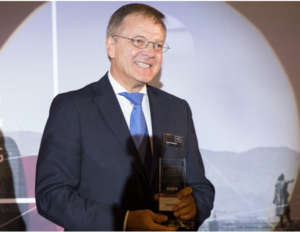
In the Project of the Year Europe category : Innovation in IT and Business, the CIO of the year in Europe was Víctor de Ávila Rueda, CIO of Sacyr. In reference to the winning project, Pfeiffer highlighted “the concept of collective talent and real-time problem solving by bringing together experts in a somewhat gamified environment. The fact that serious problems are solved is very impressive. ”

The finalists for the category were Emiliano Sorrenti, CIO of Italy’s Aeroporti di Roma, and Chris Zissis, CIO of JLL of EMEA, based in the UK.

In the category Project of the Year in Europe – Diversity in IT and Business , the judges awarded the award to Miao Sung, CIO of Mars in Belgium.

Speaking of Sung, Qualtrough stressed that “in a business leadership role it is no longer enough to recognize that diversity is an important issue for your company. As a Global CIO at Mars, Miao Song has gone far beyond the ‘why’ to the ‘how’ with a series of programs that are helping to balance moving the focus on diversity in your IT organization to a higher level, fostering the talent flow from the technology sector with initiatives that extend beyond IT to other areas of the business, helping to build a more innovative culture and improve employee satisfaction. ”

Piotr Slomianny from the Polish company Miejskie Przedsiebiorstwo Wodociagow i Kanalizacji has been chosen as the CIO of the year for the category of Project of the year Europe: sustainability in IT and business.

Qualtrough said: “Piotr Slomianny, the CIO and CFO of the Municipal Water and Wastewater Company in Wroclaw (MPWiK), and his team have implemented new technologies to reduce water losses and pipe failures while increasing organizational efficiency and customer satisfaction ”.

His vision, he continued, focuses on reducing water losses to 0% by 2040. “Working in collaboration with the private sector, the utility’s SmartFlow technology that reduces water losses is marketed in a way that could have enormous benefits beyond Poland ”, he highlighted.

“As water scarcity affects cities globally, Piotr and MPWiK’s focus on sustainable water management for today’s needs and for future generations’ is enormously remarkable,” he concluded.

Link to Original article in Computerworld

About the CIO of the year in Europe

Europe’s CIO of the Year honors IT and Business heroes as role models and incentives for the next generation. They are CIOs who not only have their central IT under control, but also contribute to the success of the company and capitalize on innovation, diversity and digitization.

For more than 15 years, IDG’s CIO brand has recognized CIO excellence in more than 20 key markets around the world, including Spain. 

This event marks the first time that IDG’s CIO brand has recognized CIOs at the pan-European level. The awards are the result of IDG’s collaboration with CIO editors from Germany, Spain, the Netherlands, Sweden, France, Italy, Poland, the Czech Republic, Denmark, Turkey and the Benelux region.

The jury included Fernando Muñoz, Director of the CIO Executive Council in Spain; Mervi Lampinen, IT Director, MSD Sharp & Dohme GmbH; UK CIO editor Edward Qualtrough; Monika Plocke, Head of Banking Technology Software Engineering at Nordea; Wendy Pfeiffer, CIO at Nutanix, Board Director at Qualys and Girls in Tech; Michael Loechle, Chief Information Officer at ABB Power Grid; Araceli García, Director, MBA in Computer Science and Business Technology, IE School of Human Sciences and Technology and Head of the IT Business Partners Group at IAG GBS; and Guus Dekkers, CTO of Tesco.

Speaking about the 2019 CIO Awards, Qualtrough celebrated the “privilege” of working with colleagues from across Europe on this initiative “which has brought together some of the continent’s top CIOs and CTOs”.

“At a time when there are changes to be more introspective, the CIO of the year in Europe is clearly European and recognizes organizations and individuals who tackle some of the biggest challenges on the continent, regardless of whether they are related to sustainability, diversity or innovation, and it really celebrates what it means to be a modern business and technology executive, ”he declared on the stage.

“Meeting the CIO of the Year Jury in Europe is a real achievement, which is why we particularly congratulate our five category leaders and indeed all the shortlisted technology leaders, their teams and the IT ecosystem that supports them. “, it is finished.



AR and VR in security – challenges and opportunities

AR and VR technologies are exploiting the consumers and decreasing privacy to a new level. Concerning both the technologies an theme being in their initial development stage ,consumers have not the slightest idea regarding how the use of AR and VR devices are raising concerns about privacy. There are many aspects to issuing AR and VR. Hackers can gain access to a consumer’s AR and VR devices to record their interactions and behaviour.

These recordings are later layed out or used to blackmail the consumer for certain ransom money. The personalities that need to maintain specific images in the society have to refrain from sensitive situations.

Content producers are under constant pressure for VR and AR devices security. The public will always be impatient and request new games with individuals that are more realistic and improved. At the expense of full testing and security checks, an enterprise can speed up a products.

With constant flooding of the market with new applications and products, there will be undiscovered vulnerabilities which will be targeted by hackers. AR and VR tech manufacturers have an obligation to safeguard their devices from hacking.

Should an app or device be hacked, the cybercriminals may cause catastrophy. Both technologies have already become and integral part of healthcare. E-commerce internet sites have already been hacked, who attempt to steal consumer records, like card details through saved and connected mobile payment solutions. Thus, hackers will access the bank account discretely and deplete it completely.

As there are benefits to understand in AR and VR, there are its down as well that have to be dealt with urgently by the developers of devices and apps. Without the elements of good security practices, both AR and VR industries are doomed and prone to malicious cyber attacks.


Pandemic sees surge in companies using AR

The more practical cousin of virtual reality, AR is mainly used to provide remote training and technical support to production sites and R&D centers with the help of smart glasses and 3D imaging similar to Google Street View. It allows viewers to pause videos, draw circles and lines into the image, and even use their own projected hands to point and gesture.

After remote teams helped complete a new beverage factory in Thailand seven weeks ahead of schedule, test new KitKat confectionery molds in absentia and commission new pet-food production lines in the US, Nestle plans to expand the technology across the company.

“Today we understand the full potential of the positive impact of the crisis as well,” Thomas Hauser, Nestle’s head of product and technology development, said in an interview. “We enjoy a higher level of efficiency, speed and a reduced impact on the environment.”

Philips, Electrolux

Joining Nestle are appliance makers Royal Philips NV and Electrolux AB in betting on the use of augmented reality due to the pandemic.

While Electrolux used it to deal with not being able to install equipment it shipped to North America and Latin America, Philips relied on the technology while urgently expanding ventilator capacity to cope with a surge in critically ill Covid-19 patients needing help with breathing.

In a race to set up additional production lines, the Dutch company remotely connected different sites to help train workers and exchange knowledge, bypassing the need for travel. Part of that drive is also focused on artificial intelligence in an attempt to detect how patients are trending on the basis of data analytics. The technology helps to forecast whether they fall into a delirium or into sepsis, and whether they need help.

“You see a rapid integration of virtual reality technologies,” said Philips chief executive officer Frans Van Houten. “The whole world will see an acceleration in the adoption of informatics.” – Bloomberg

Original article appears here.


Essential Steps For Any Business To Prepare For Augmented Reality

How can a business make itself ready to successfully apply AR? What will make implementation easier and more effective and ensure that the initial efforts provide a solid foundation for future transformation?

Knowing Where You Are And Where You Want To Go

There are two things you need to do at the very beginning: Identify a business goal, and assess what you are currently doing to achieve that goal.

A business goal can be retaining expertise by transferring skills from older or retiring workers to newer or unskilled workers. It can be providing product demos to prospects for products in a portfolio. It can be ensuring that engineers collaborate successfully on meeting permitting and safety requirements for new assembly lines across global locations.

Most importantly, what are the processes and procedures? Where are the bottlenecks or particular difficulties?

When considering where best to apply AR, further assessment is necessary — technology readiness. An impressive AR demo can be created for almost any business situation, but it’s important to choose a use case that can scale. AR can be used to improve routine, repetitive activities, but it won’t show its true value there, and investment in it will show less return.

AR really shines at helping with complex, varied and changing circumstances. The wider the range of product types, manufacturing procedures or workforce capabilities, the more clearly AR will show its value and the wider the organizational uptake will be.

Delivering AR To The User

AR content can be delivered to the end user in a variety of ways, and careful consideration of that user’s needs and the constraints of their work environment is necessary for a successful demonstration.

For example, a sales rep may need to present a broad portfolio of thousands of product configurations to prospects and customers. Currently, that may involve shipping samples to trade shows, providing spec sheets, and linking to diagrams and videos on webpages.

With AR, a customer can see all the details of a specific product, get a good idea of how it works and understand how it differs from the competition. Implementing AR on a phone or tablet can allow that sales rep to easily build a relationship with that customer, demonstrate a product of interest, communicate its details and use, and answer any technical questions while maintaining the touch essential to the sales process.

However, if the goal is to improve worker productivity on the production line, where various tools need to be picked up and used, AR content can be best delivered through a hands-free wearable, whether binocular eyewear such as Microsoft HoloLens or Magic Leap or monocular eyewear such as Google Glass Enterprise or the RealWear HMT-1. That information is overlaid on what the worker is seeing, whether it is instructions, fill levels or safety precautions, without interfering with the worker’s tasks.

It’s worth spending some time to really consider the various possible ways your AR could be used now and in the future so the chosen technology presents the information in an optimal way for the user.

Ensuring Access To The Necessary Content

An audit of the information necessary to build an AR experience that communicates effectively to the user can turn up gaps. This is fairly common because the range of information AR can communicate is much wider than is possible with existing channels. Ensuring the availability of this information as early in the process as possible can make for effective implementation.

If you want to provide procedural guidance to line workers, you must have — or be able to create or capture — digitized work instructions. If you want to provide 3D instructions on how to maintain and service a newly acquired machine, you must have the 3D CAD data. If you want workers to see diagnostic information about a machine’s performance such as vibration, temperatures and fill levels, that machine must have the necessary sensors and connectivity.

Identifying this information will require acquiring, storing, managing, distributing and analyzing new types of data and repurposing data you already have.

While not ideal, the lack of some information is not fatal. For example, if there is no 3D CAD data for your machine, using a head-mounted device to record an expert performing all the required maintenance procedures can fill the gap. However, identifying those gaps and planning methods for filling those gaps is essential.

Presenting That Content In A Useable Way

Technologies such as web and mobile apps, which were new not so long ago, are now established, and the methods for creating them and making them usable are defined. AR is much earlier in the process of becoming routine, so the specifics of AR usability still require attention.

Even an AR project that addresses a business goal, understands user needs and is supplied with the right content can fail if the user experience is inadequate. There are many ways to go wrong, from excessive or poorly organized information to inadequate visual contrast.

The need for usability is great, and tools to assist in AR content authoring are developing quickly. They’re already providing significant assistance to content developers, but understanding the capabilities and needs of the worker and rigorously establishing what information is most important in what context is key in this step.

You are Ready For AR

Almost every business can improve efficiency, reduce costs, more quickly skill workers or ensure compliance through the information AR communicates. Choosing the right place to try AR first takes some thought and planning, which will enable an effective AR implementation that will provide a foundation for future growth.